In photovoltaic (PV) power systems, the inverter plays a critical role by converting direct current (DC) generated by solar modules into alternating current (AC) suitable for grid connection or local consumption. Based on system architecture and power level, PV inverters are commonly classified into central inverters and string inverters. Each topology has distinct characteristics, application scenarios, and system design implications.
What Is a Central Inverter?
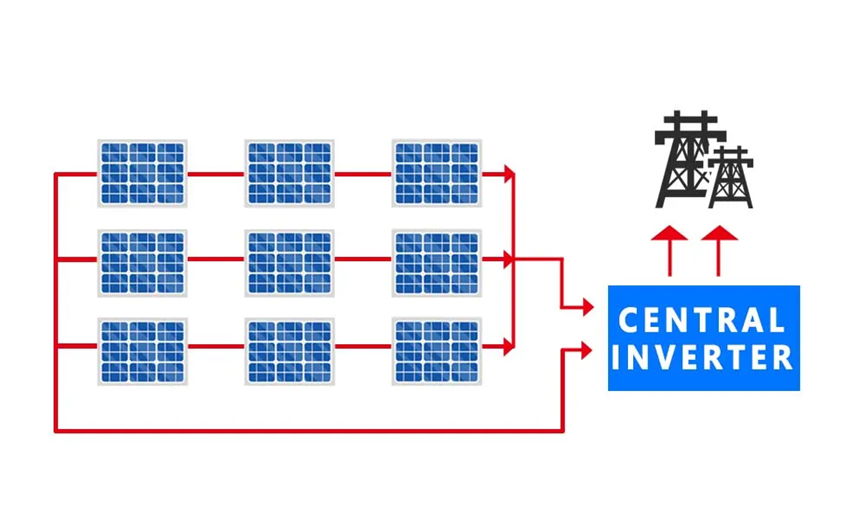
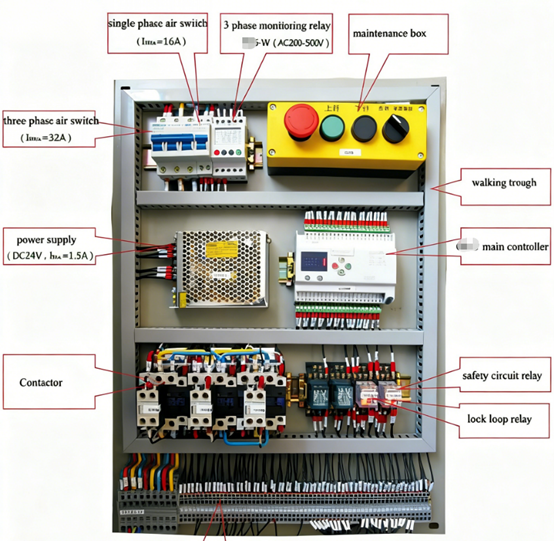
A central inverter system typically consists of a main controller and one or more inverter units. The main controller manages the overall inverter operation and collects output signals from the inverter modules to ensure coordinated control and system-level optimization.
Central inverters convert aggregated DC power into AC power. As the DC power from multiple PV strings is combined before inversion, central inverters generally operate at high power ratings, typically 500 kW or above in utility-scale PV power plants. Due to their large capacity, centralized control architecture, and mature industrial design, central inverters are well suited for applications requiring high performance, low acoustic noise, high reliability, and long service life, such as large ground-mounted solar power plants.
A typical central inverter system configuration is as follows:
PV modules → DC cables → DC combiner box → DC cables → Central inverter → AC cables → Step-up transformer
What Is a String Inverter?

A string inverter system is composed of multiple smaller inverters connected in parallel at the system level, with each inverter operating independently. Each string inverter directly converts DC power from its connected PV strings into AC power, and the AC outputs are then collected and combined.
Because DC power is converted to AC at the string level, string inverters generally have lower individual power ratings, commonly below 100 kW in PV power plant applications. Different inverter models are available in capacities such as 10 kW, 20 kW, 30 kW, and 36 kW, with variations mainly determined by the number of input strings and the electrical characteristics of the PV modules (input voltage and current).
String inverters are typically applied in scenarios requiring lower power levels, reduced noise, and shorter cooling times, and they are also widely used in distributed PV installations. Their modular structure allows flexible system expansion and independent operation of each inverter.
A typical string inverter system configuration is as follows:
PV modules → DC cables → String inverter → AC cables → AC combiner box → AC cables → Step-up transformer
Central Inverter vs. String Inverter
- Capacity and Power Architecture
The most fundamental difference between the two inverter types lies in system capacity and power architecture. Central inverters are designed for large-scale power conversion with aggregated DC input, while string inverters distribute power conversion across multiple smaller units closer to the PV strings.
- System Configuration and Cabling
In central inverter systems, PV modules are connected to DC combiner boxes and DC distribution cabinets before being fed into the inverter, resulting in longer DC cable runs and centralized power conversion. In contrast, string inverter systems connect PV modules directly to individual inverters using shorter DC cables, followed by AC-side aggregation through AC combiner boxes or AC switchgear.
As a result, the main structural difference between the two systems is reflected in DC-side versus AC-side power aggregation, which also affects the quantity and layout of DC and AC cables.
- MPPT and System Flexibility
String inverters typically integrate multiple Maximum Power Point Tracking (MPPT) channels, allowing each inverter—or even each string group—to operate independently. This improves energy yield under conditions such as partial shading or module mismatch. Central inverters usually rely on fewer MPPT channels and manage power optimization at a more aggregated level.
- Application Scenarios
Central inverters are widely used in large-scale utility PV plants where uniform installation conditions, centralized maintenance, and high-power conversion are required. String inverters are commonly applied in distributed PV systems, complex terrains, or projects where system modularity, scalability, and fault isolation are important design considerations.
Conclusion
Both central inverters and string inverters are mature and widely adopted solutions in modern photovoltaic systems. Central inverters emphasize high capacity and centralized power conversion, making them suitable for large utility-scale PV plants. String inverters offer greater modularity, flexibility, and localized control, making them ideal for distributed and medium-scale installations.
The choice between a central inverter and a string inverter depends on factors such as project scale, system layout, grid connection requirements, operation and maintenance strategy, and long-term reliability considerations.