In low-voltage power distribution systems, industrial control systems, and various types of electrical equipment, overcurrent protection is a core measure to ensure personnel safety and reliable equipment operation. Circuit breakers and fuses are the two most widely used overcurrent protection devices. Although their basic function is to interrupt the circuit under abnormal current conditions, there are significant differences in their definitions, working principles, usage methods, and system compatibility. Understanding these differences is crucial for electrical system design and equipment selection.
Circuit breaker vs fuses in definition
What is fuses
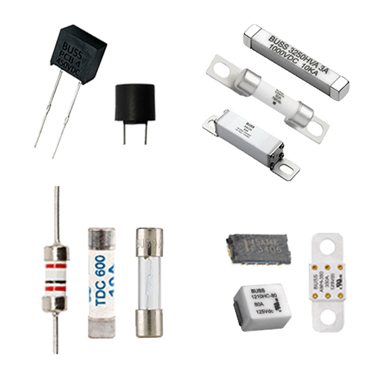
A fuse is a passive protection device that relies on the thermal effect of current to achieve fault isolation. Its core component is a fuse element (usually made of low-melting-point materials such as tin-lead alloy or copper-zinc alloy) encapsulated in an insulating casing. It is connected in series in the circuit, acting as a “weak link” in the power system: during normal operation, the fuse element stably carries the rated current; when overcurrent faults such as short circuits or prolonged overloads occur, the heat generated by the current exceeds the melting point of the fuse element, causing it to melt and break the circuit, thus cutting off the power supply to protect electrical equipment and lines.
Fuses have the characteristics of simple structure, low cost, and mature technology. They can be classified into plug-in, tubular, and blade types according to their structure, and can be adapted to different voltage levels (from low voltage 220V to high voltage 10kV) and current specifications. However, their protection function is one-time; after the fuse element melts, the entire fuse needs to be replaced to restore the circuit, which limits its application in scenarios requiring rapid power restoration.
What is circuit breaker
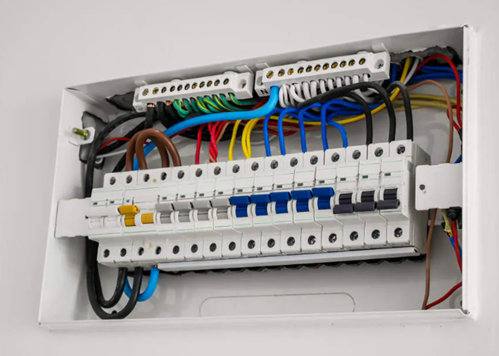
A circuit breaker is an active protection device that integrates detection, judgment, and execution functions, achieving circuit switching and fault protection through mechanical or electronic mechanisms. As a multi-functional electrical component, it can manually switch the circuit on and off under normal operating conditions, and automatically trip and cut off the power supply within a specified time when faults such as overcurrent, short circuit, leakage, and overvoltage occur.
A circuit breaker consists of a contact system, arc extinguishing system, operating mechanism, and protection device (such as a thermal-magnetic trip unit or electronic trip unit). According to the arc extinguishing medium, it can be divided into air circuit breakers, vacuum circuit breakers, and sulfur hexafluoride circuit breakers; according to the application scenario, it includes low-voltage molded case circuit breakers (MCCB), air circuit breakers (ACB), and high-voltage circuit breakers. Unlike fuses, circuit breakers are reusable – after a fault trip, the circuit can be restored by manual or automatic (for some intelligent models) resetting without replacing the core components.
Circuit breaker vs fuses in working principle
Fuses working principle
The working principle of a fuse is based on a thermal melting mechanism. When the current exceeds the rated value and persists for a certain period, the fuse element melts due to Joule heating, creating an electrical break. For large short-circuit currents, the fuse can operate in a very short time and effectively limit the peak current, reducing the electrical and thermal stress on the equipment.
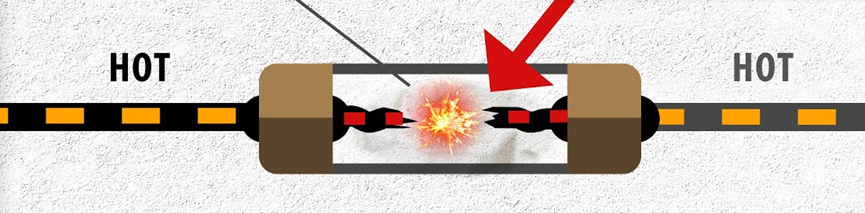
Due to the absence of mechanical moving parts, fuses have the advantages of simple structure and stable operating characteristics, but they also lack status indication and reset capabilities.
Circuit Breakers working principle
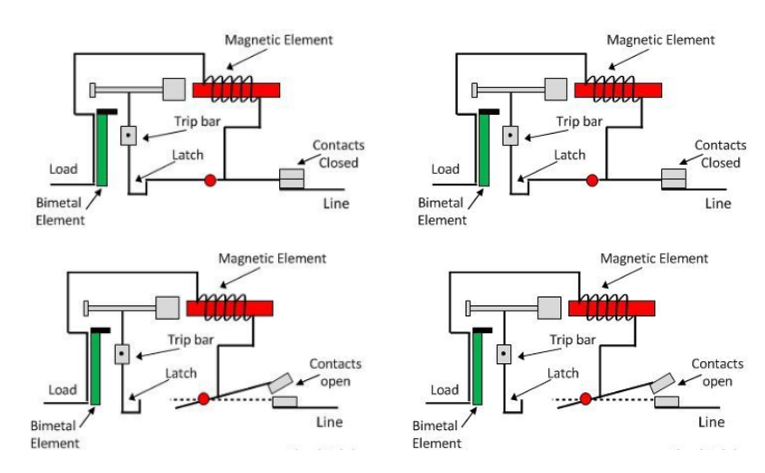
Circuit breakers achieve their protective function by detecting current changes and triggering a breaking mechanism. Common methods include:
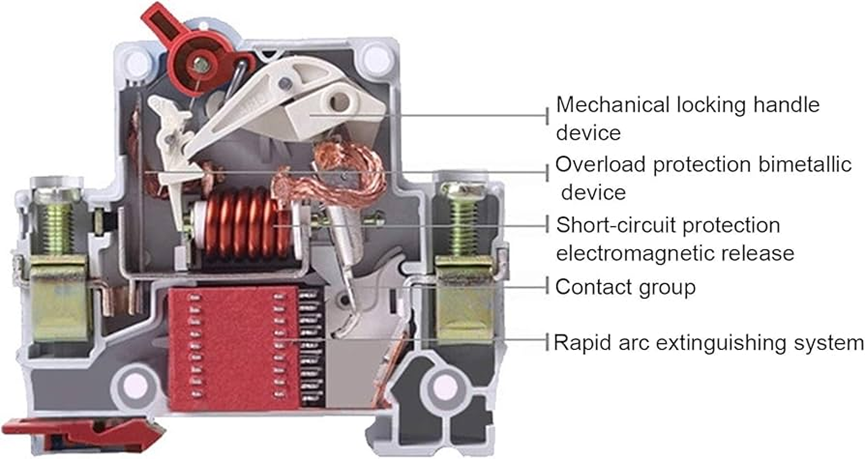
- Thermal tripping: A bimetallic strip bends due to heat, used for overload protection.
- Magnetic tripping: A large current generates a strong magnetic field, quickly driving the tripping mechanism, used for short-circuit protection.
- Electronic tripping: Precise judgment is made through current sensors and microprocessors, and tripping parameters are adjustable.
When a fault occurs, the circuit breaker contacts separate, generating an arc, which is quickly extinguished by the arc extinguishing system, safely interrupting the circuit.
Key difference between circuit breaker and fuse
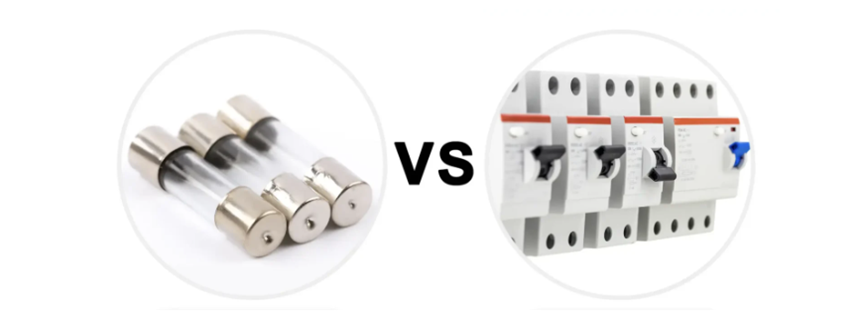
| Fuse | Circuit breaker | |
| Protection | One-time protection; the fusible element must be replaced after action | Reusable protection; can be reset manually or automatically after tripping |
| Working mechanism | Passive thermal melting; relies on the thermal effect of current | Active mechanical/electronic tripping; integrates detection and execution functions |
| Protection parameter adjustability | Fixed time-lag curve; cannot be adjusted | Flexible adjustment of protection parameters (time-lag, current threshold); supports multiple protection functions (overload, short circuit, leakage, etc.) |
| Breaking capacity | Limited breaking capacity; suitable for small and medium fault currents | Strong breaking capacity; can break large short-circuit currents (up to hundreds of kA) |
| Action speed | Fast action for short circuits (ms level); slow action for overloads | Instantaneous action for short circuits; adjustable time-lag for overloads; electronic models have higher action precision |
| Operation mode | Only series in the circuit; no manual on-off function | Supports manual on-off and automatic tripping; some models support remote control |
| Maintenance cost | Low initial cost; high long-term maintenance cost (frequent replacement of fusible elements) | High initial cost; low long-term maintenance cost (no need to replace core components) |
| Application scenario | Simple circuits, low-voltage equipment, temporary power supply, scenarios with low requirements for power supply recovery | Complex power systems, intelligent equipment, high-voltage lines, scenarios requiring frequent on-off and rapid fault recovery |
| Additional functions | No additional functions; only overload and short-circuit protection | Supports leakage protection, overvoltage protection, energy measurement, remote communication, etc. |
Conclusion
Fuses and circuit breakers each have their own advantages and are suitable for different protection needs. Fuses are known for their simple structure, fast response, and excellent current limiting capabilities, while circuit breakers, with their resettable nature, adjustable protection parameters, and system integration capabilities, have become a more versatile and intelligent solution in modern electrical systems.