Circuit breakers are essential electrical protection devices that automatically cut off the circuit when an overload or a short circuit occurs, preventing electrical fires and equipment damage. Among the common types, Type C and Type D circuit breakers are widely used in residential, commercial, and industrial scenarios, but they differ significantly in performance, application, and technical parameters. This article will detail their definitions and core differences to help you make an accurate selection.
What is a Type C Circuit Breaker?
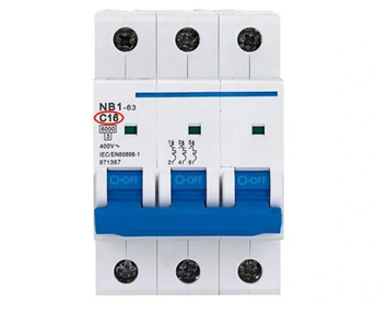
Type C circuit breakers are designed to protect circuits with moderately inductive loads, such as general lighting and small household appliances. They trip instantly when the current reaches 5–10 times the rated current.
What is a Type D Circuit Breaker?
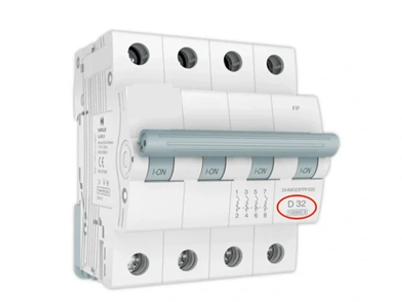
Type D circuit breakers are intended for circuits with highly inductive loads, such as motors, transformers, and heavy machinery. They trip instantly when the current reaches 10–20 times the rated current, allowing them to tolerate high inrush currents without nuisance tripping.
Type C VS Type D Circuit Breakers – What Is the Difference?
The main differences between Type C and Type D circuit breakers are reflected in the following aspects:
Instantaneous Tripping Current Range
Type C Circuit Breakers: The instantaneous tripping current is 5 to 10 times the rated current. For example, a Type C circuit breaker with a rated current of 20A will trip instantaneously when the current reaches between 100A and 200A.
Type D Circuit Breakers: The instantaneous tripping current is 10 to 20 times the rated current. Similarly, a Type D circuit breaker with a rated current of 20A requires the current to reach between 200A and 400A before it will trip instantaneously.
Surge Resistance
Type C Circuit Breakers: These have a relatively lower tolerance for short-duration high currents and are suitable for loads with stable starting currents and no severe current surges.
Type D Circuit Breakers: These can withstand higher instantaneous current surges; they can effectively ride through the inrush currents generated when equipment such as electric motors start up, thereby preventing nuisance tripping.
Application
Type C Circuit Breakers: Commonly used for residential lighting, socket circuits, and household appliances (such as TVs, refrigerators, computers, etc.), as well as for general lighting and office equipment circuits in office buildings, shopping malls, and schools.
Type D Circuit Breakers: Primarily used for circuits involving highly inductive loads or equipment with large starting currents—such as electric motors, water pumps, compressors, transformers, outdoor air conditioning units, and electric welding machines.
Breaking Capacity
Type C Circuit Breakers: The short-circuit breaking capacity is generally 4 to 7 times the rated current.
Type D Circuit Breakers: The short-circuit breaking capacity is typically 7 to 10 times the rated current, with some products capable of reaching even higher multiples.
Price
Generally speaking, Type D circuit breakers are slightly more expensive than Type C circuit breakers due to their higher technical requirements and greater manufacturing costs. No matter whether you need Type C & Type D circuit breakers, MCB, MCCB, Sell-Best can offer the lowest price for you.
Conclusion
In summary, Type C circuit breakers are suitable for general loads and lighting circuits, prioritizing a rapid response to short circuits and overloads. Type D circuit breakers are specifically designed for highly inductive loads and equipment with large starting currents, emphasizing surge resistance and stability. When making a selection, it is essential to precisely match the circuit breaker to the specific load type and practical requirements to ensure the safe and reliable operation of the electrical circuit.