Power distribution switchgear serves as the vital backbone of modern electrical infrastructure, ensuring safe power reception, precise energy allocation, and reliable motor control across industrial and commercial facilities. This article provides a comprehensive overview of 10 essential types of power switchgear and control cabinets—including incoming, feeder, busbar coupling, capacitor, MCC, PLC, VFD, soft starter, ATS, and distribution panels—detailing their core functions and the specialized protection relays required to safeguard equipment and guarantee continuous, uninterrupted operation.
10 Types of Power Distribution Switchgear
1. Incoming Line Cabinet
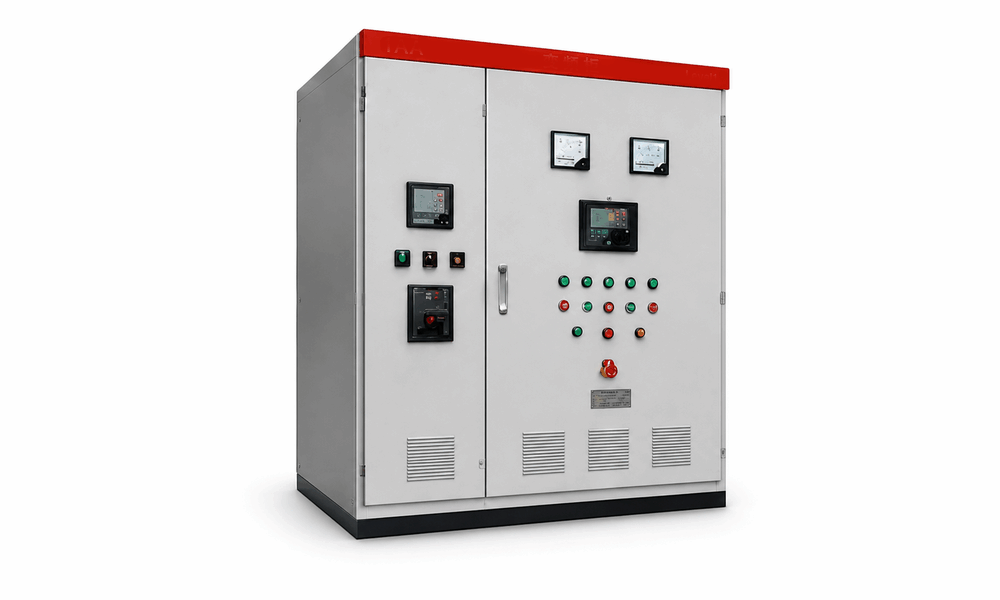
As the core equipment at the power inlet of the distribution room, the incoming line cabinet is mainly used to receive power from the upstream source and to provide overall control and protection for the entire power distribution system. It has comprehensive protection functions such as short circuit, overload, and undervoltage protection, and can monitor key electrical parameters such as voltage, current, and power in real time. Through centralized control and overall protection mechanisms, the incoming line cabinet is not only easy to operate, but also provides a solid guarantee for the safe and stable operation of the entire power supply system.
The incoming line cabinet is equipped with a comprehensive protection relay system based on medium voltage (e.g., 10kV/35kV) or low voltage (e.g., 400V) levels and power supply requirements. It uses overcurrent relays to handle system overloads and high-current short circuits, ground fault relays to detect single-phase grounding and insulation degradation, and over/undervoltage relays to prevent abnormal voltage from damaging equipment or to avoid blind self-starting when the power grid is restored. In complex systems such as dual power supplies and ring networks, directional overcurrent relays are also selected to precisely disconnect the faulty incoming line, and bus differential relays are used to achieve the highest level of instantaneous protection against faults in the incoming line and within the bus. Combined with automatic switching system (ATS) relays, it automatically switches to the backup power supply when the main incoming line loses voltage, thus comprehensively ensuring the safety, stability, and continuous power supply of the distribution system’s “main gate.”
2. Feeder Cabinet (Outgoing Line Cabinet)
The feeder cabinet is mainly used for power distribution in workshops, floors, and specific equipment areas, responsible for transmitting electrical energy to each independent power circuit. It has powerful branch circuit protection capabilities, enabling fault isolation, and ensuring that each circuit does not affect the others. This independent design greatly improves the system’s maintainability, facilitating quick replacement and routine maintenance by staff.
The core mission of the feeder cabinet (outgoing line cabinet) is to accurately isolate faults. Its protective relays are primarily configured with definite-time/inverse-time overcurrent protection and instantaneous overcurrent protection to handle branch line overloads and phase-to-phase short circuits; zero-sequence grounding protection to detect cable insulation damage or single-phase grounding; and thermal overload protection to prevent cable overheating and aging. If the outgoing line connects to an outdoor overhead line, an automatic reclosing relay is often selected to ensure rapid tripping and disconnection when a fault occurs in this branch, without affecting the normal power supply to the busbar and other circuits.
3. Bus-tie Cabinet
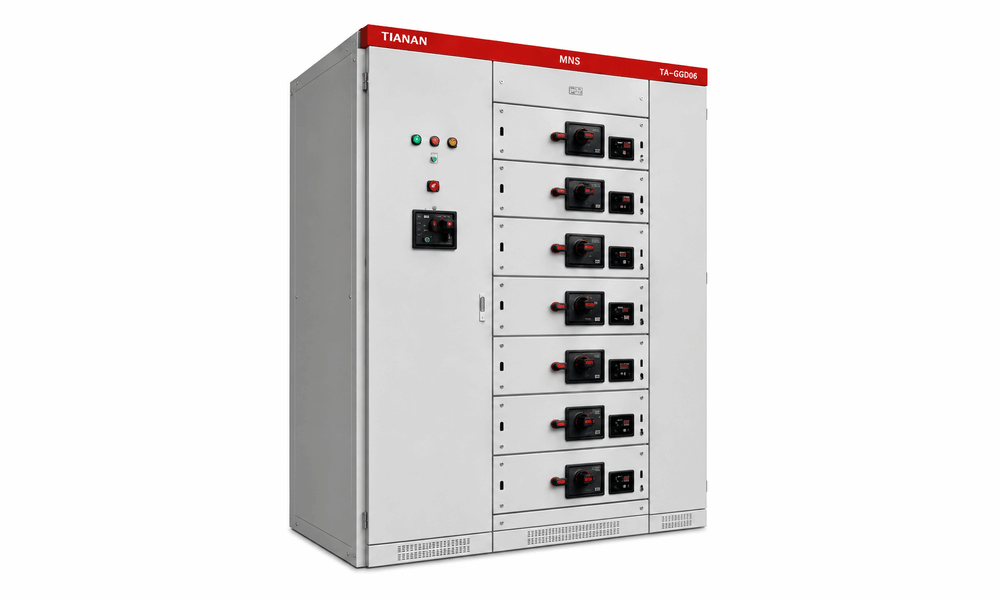
Bus-tie cabinets are widely used in dual-power supply systems; their primary function is to connect two busbar sections and facilitate manual or automatic power switching in response to changes in power sources or loads. By flexibly interconnecting busbars and offering various switching modes, the bus-tie cabinet effectively ensures the continuity and reliability of the power supply, preventing losses caused by sudden power outages.
The bus-tie cabinet is equipped with protection relays designed to handle faults between busbar sections and manage system interlocking. It utilizes overcurrent and instantaneous trip relays (ANSI 50/51) to prevent cross-section overloads or severe phase-to-phase short circuits when the busbar sections are interconnected, and employs zero-sequence earth-fault protection (ANSI 50N/51N) to detect single-phase ground faults on the busbar sections. Additionally, it integrates busbar differential protection (ANSI 87B) to precisely isolate severe faults within the busbar zone. It also works in close coordination with Automatic Transfer Switch (ATS/BZT, ANSI 83) and undervoltage protection (ANSI 27) functions to automatically or manually manage the safe interlocking and closing of the bus-tie circuit breaker in the event of a primary power source failure, thereby maximizing uninterrupted power supply for the dual-busbar system while ensuring effective fault isolation.
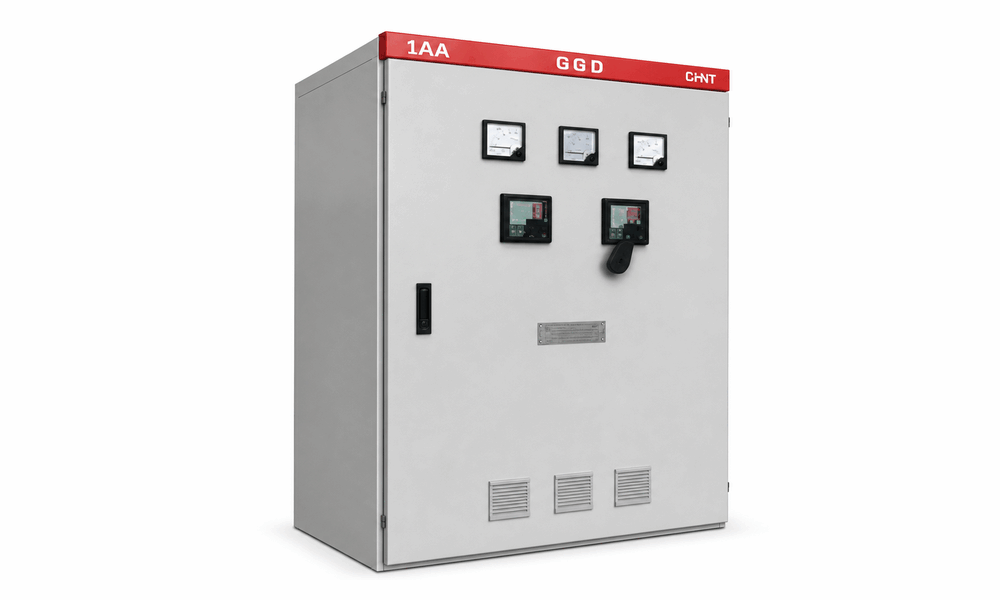
4. Capacitor Compensation Cabinet
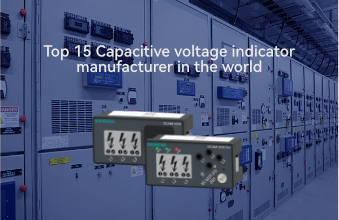
Capacitor compensation cabinets are typically deployed in the power distribution systems of factories and commercial buildings. They aim to reduce reactive power losses in the lines by improving the power factor, thereby achieving energy savings and lowering electricity costs. These cabinets not only assist enterprises in meeting grid compliance requirements regarding power factor but also utilize intelligent automatic switching mechanisms to reduce equipment losses and extend the service life of the overall electrical system. Capacitor compensation cabinets are equipped with specialized protection relays tailored to the characteristics of capacitor components and power grid quality.
They utilize overcurrent and instantaneous trip relays (ANSI 50/51) to handle internal short circuits or inrush currents, and employ overvoltage and undervoltage protection (ANSI 59/27) to prevent dielectric breakdown caused by excessive voltage or reverse reactive power flow during undervoltage conditions. Harmonic/over-harmonic protection and thermal overload relays (ANSI 49) are integrated to prevent capacitor overheating, swelling, or bursting caused by high-order harmonics. Additionally, voltage/current unbalance protection (ANSI 60) precisely detects internal faults resulting from capacitor unit damage, while an automatic reactive power compensation controller (power factor relay) manages the safe, automatic switching of capacitor banks and provides lockout functions against frequent switching due to voltage fluctuations, thereby ensuring the safe and efficient operation of the capacitor compensation system.
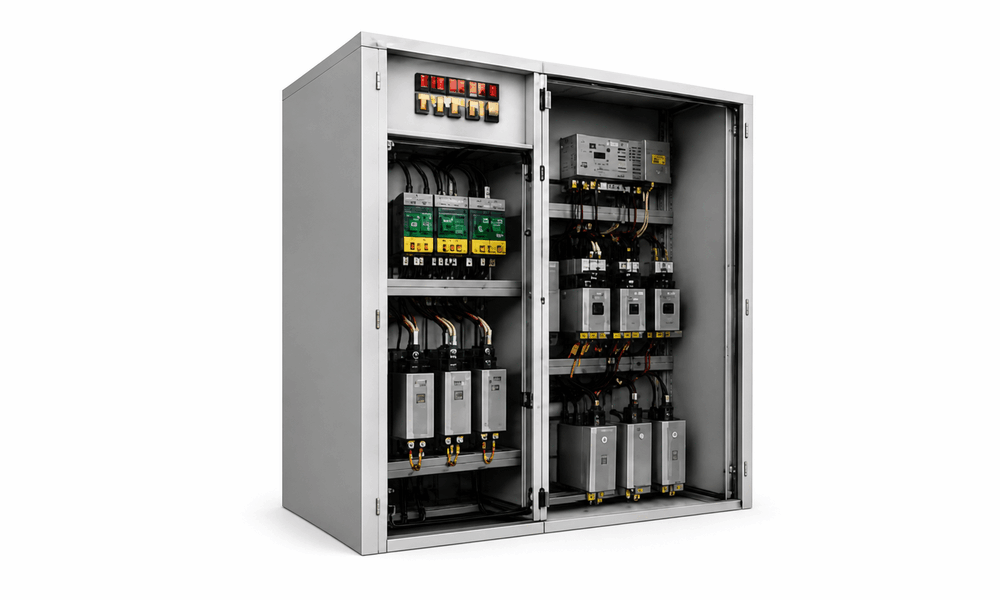
5. MCC Motor Control Cabinet
The MCC (Motor Control Center) cabinet is a centralized control terminal specifically designed for motor-driven equipment such as pumps, fans, and conveyor lines, primarily managing motor starting, stopping, and operational processes. It integrates multiple protection functions—including overload, short-circuit, and phase-loss protection—to ensure reliable motor operation under complex conditions while enabling efficient, centralized management and monitoring of multiple motors.
The MCC cabinet is equipped with specialized protection relays tailored to the inductive loads and demanding operating conditions of electric motors. It utilizes overload/thermal overload relays (ANSI 49) to accurately simulate motor heating and prevent winding burnout caused by prolonged overloading; employs instantaneous/short-circuit protection (ANSI 50/51) to handle severe short-circuit faults in cables or within the motor; and incorporates phase-loss, phase-unbalance, and phase-reversal protection (ANSI 46/47) to prevent overheating, burnout, or mechanical damage resulting from power supply phase loss or reverse rotation. Furthermore, by integrating locked-rotor/overcurrent protection, light-load/no-load protection (ANSI 37, such as dry-run protection for pumps), earth-fault protection or ground fault monitoring (ANSI 50N/51N), and temperature control/thermistor protection relays (ANSI 49T, which directly monitor winding temperature), the system ensures comprehensive safety during startup, smooth operation, and intelligent centralized control.
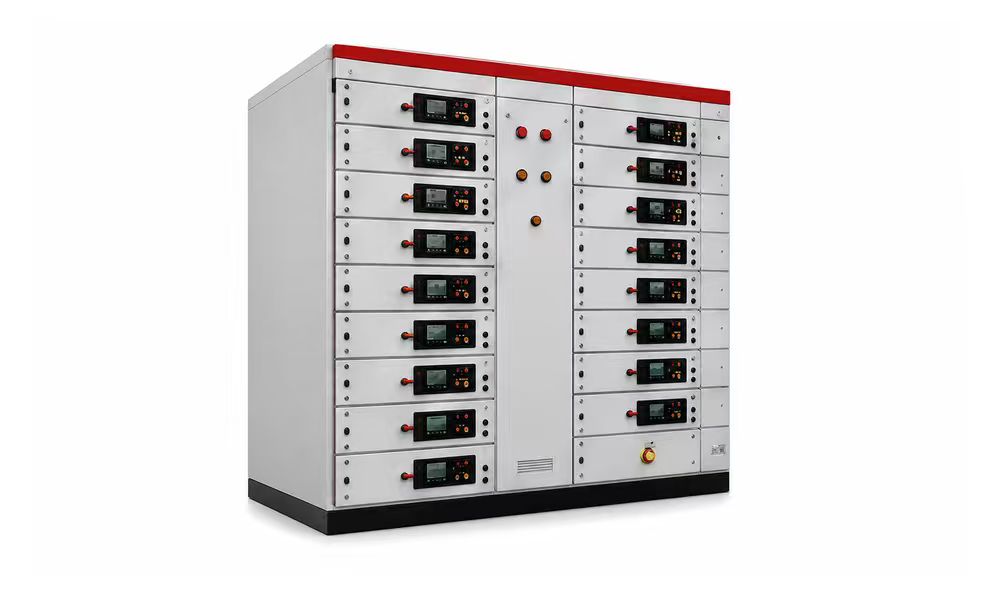
6. PLC Control Cabinet
PLC control cabinets are primarily used in automated production lines and equipment control systems to facilitate automated logic control and monitoring. They receive field signals and execute logic control while communicating efficiently with devices such as host computers, touchscreens, and variable frequency drives (VFDs) to enable comprehensive automated monitoring. These cabinets feature intelligent control and logic processing capabilities, robust system communication, and excellent stability, reliability, and interference resistance; their modular design greatly simplifies future maintenance and upgrades.
As the core of low-voltage logic control, the PLC control cabinet prioritizes the protection of power supplies and communication interfaces. Key components include single-phase over/under-voltage relays and surge protective devices (SPDs) to prevent damage from external power anomalies; 24V DC overcurrent/electronic circuit protection relays to prevent overloads or short circuits in the internal DC control power supply; and intermediate relays or solid-state relays (SSRs) for electrical isolation and signal conversion in field sensor or actuator circuits. These measures ensure the control system operates stably within complex industrial electromagnetic environments.
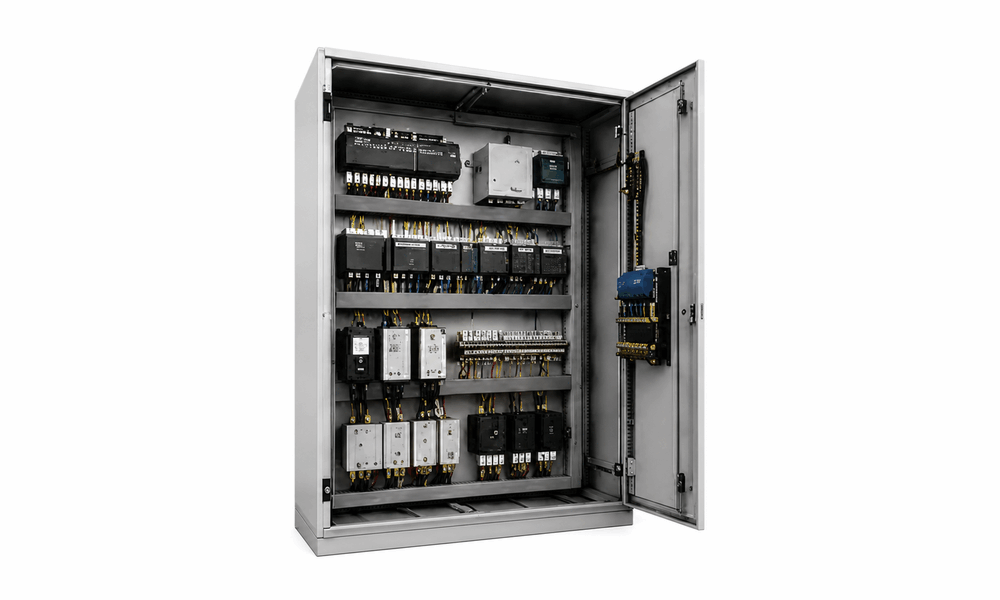
7. Variable Frequency Drive (VFD) Cabinet
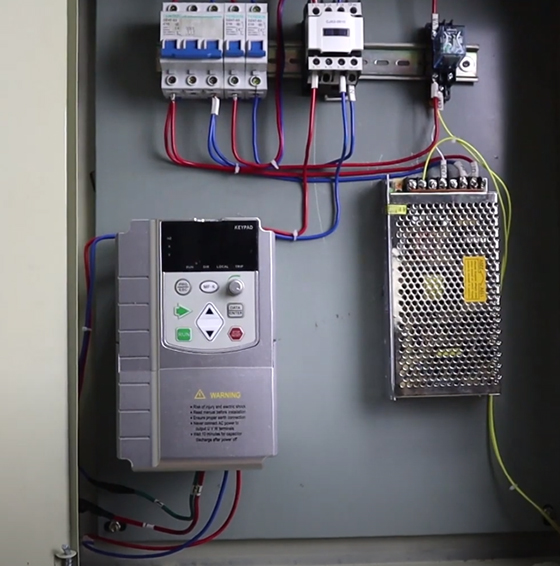
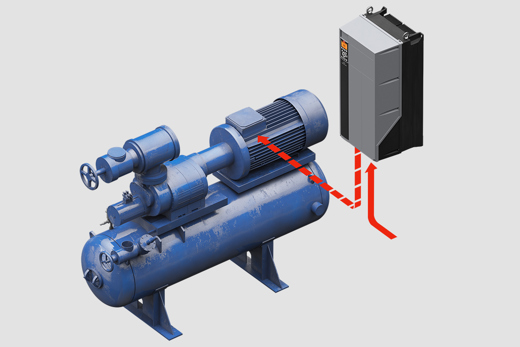
VFD cabinets are commonly used with variable-speed equipment such as fans, pumps, and hoists, achieving energy-efficient control by regulating motor speed and output frequency. They enable soft starting, speed regulation, and energy-efficient operation of motors, effectively protecting the motor while extending equipment lifespan. VFD cabinets offer significant energy-saving benefits, smooth speed regulation, and superior performance; they integrate multiple reliable safety protection mechanisms and feature flexible control methods, making them suitable for a wide range of applications.
Variable Frequency Drive (VFD) cabinets house highly sensitive power electronic components (IGBTs). Their protection relay systems focus on safeguarding both the drive itself and the downstream motor. Typical configurations include: over/undervoltage and phase sequence relays (ANSI 27/59/47) to monitor grid anomalies at the input; electronic thermal overload relays (ANSI 49) to address overheating or overloads in the motor and cables on the output side; zero-sequence earth leakage relays (ANSI 50N/51N) to detect leakage or ground faults; and safety control/fault output relays to safely disconnect the incoming power supply during a drive trip. These components collectively ensure the safety and reliability of the variable-speed drive process.
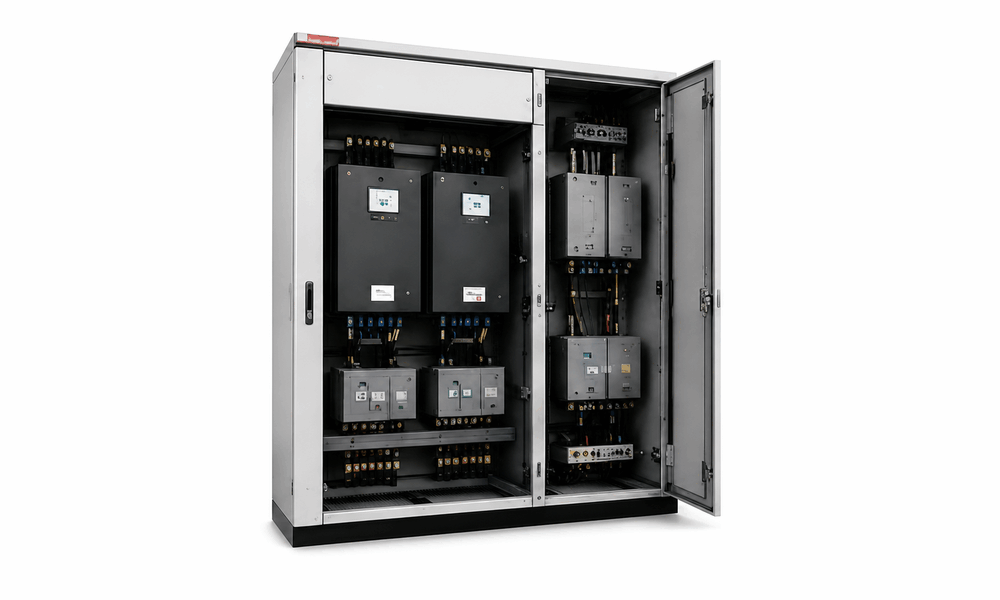
VFD cabinets are commonly used with variable-speed equipment such as fans, pumps, and hoists, achieving energy-efficient control by regulating motor speed and output frequency. They enable soft starting, speed regulation, and energy-efficient operation of motors, effectively protecting the motor while extending equipment lifespan. VFD cabinets offer significant energy-saving benefits, smooth speed regulation, and superior performance; they integrate multiple reliable safety protection mechanisms and feature flexible control methods, making them suitable for a wide range of applications.
Variable Frequency Drive (VFD) cabinets house highly sensitive power electronic components (IGBTs). Their protection relay systems focus on safeguarding both the drive itself and the downstream motor. Typical configurations include: over/undervoltage and phase sequence relays (ANSI 27/59/47) to monitor grid anomalies at the input; electronic thermal overload relays (ANSI 49) to address overheating or overloads in the motor and cables on the output side; zero-sequence earth leakage relays (ANSI 50N/51N) to detect leakage or ground faults; and safety control/fault output relays to safely disconnect the incoming power supply during a drive trip. These components collectively ensure the safety and reliability of the variable-speed drive process.
8. Soft Starter Cabinet
Soft starter cabinets are widely used for high-power motors, water pumps, air compressors, and similar equipment. Their primary function is to limit motor starting current, thereby reducing stress on the power grid and mechanical equipment. They enable smooth motor starting and stopping, providing comprehensive protection for both the motor and the machinery. These cabinets feature controllable starting current, effectively reducing mechanical wear and extending equipment lifespan; they are also simple to operate and offer exceptional operational reliability.
Since soft starter cabinets must withstand high starting currents and thermal stress during the motor’s startup phase, they are equipped with specific protection relays: start-timeout/locked-rotor relays to prevent the motor from remaining in the startup state for too long; thermal overload relays (ANSI 49) for precise motor protection based on thermal accumulation principles; phase-loss/phase-imbalance relays (ANSI 46) to handle power supply anomalies; and bypass switching logic relays that command the main bypass contactor to engage and take over operation once the soft start is complete. These measures effectively extend the service life of both the soft-start components and the motor.
9. ATS (Automatic Transfer Switch) Cabinet
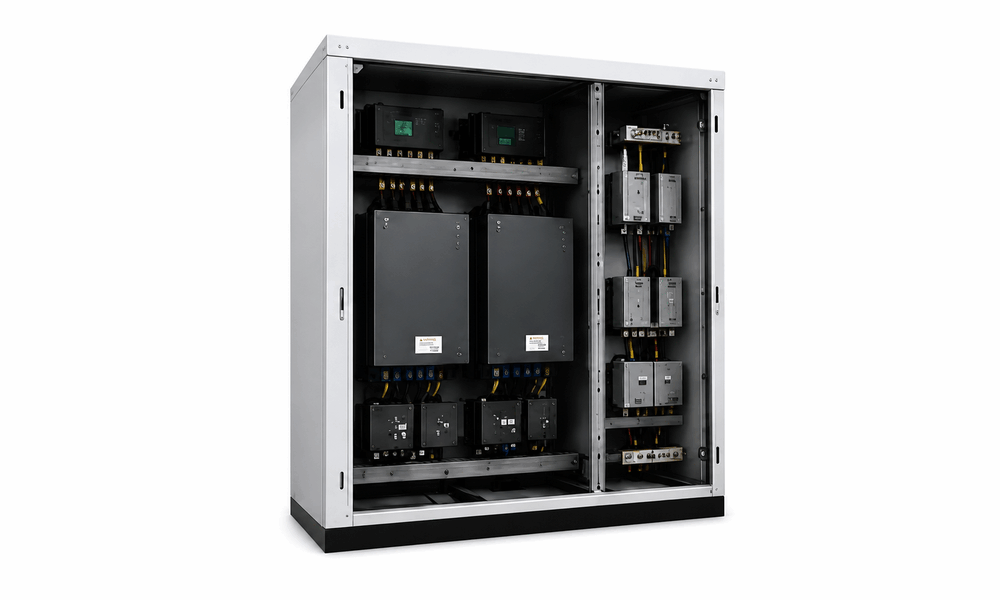
ATS cabinets are primarily used in critical facilities such as hospitals and data centers, where they automatically switch between two power sources to ensure continuous power supply. They facilitate automatic or manual switching between the main power source and the backup source, guaranteeing uninterrupted power to critical loads. This cabinet enables rapid and reliable source switching; featuring dual-power redundancy and flexible operating modes, it executes transfers quickly to ensure uninterrupted power supply to the greatest extent possible.
The core function of the ATS cabinet is the precise monitoring and automatic, safe switching between two power sources. Its protection relay configuration typically includes dual-channel over/undervoltage and phase-loss/phase-sequence relays (ANSI 27/59/47) for real-time monitoring of main and backup power quality; undervoltage time-delay relays to trigger switching logic upon voltage loss; and electromechanical interlocking relays combined with automatic transfer control logic (ANSI 83) to prevent short circuits caused by simultaneous connection of both sources during the transfer process. These components ensure a rapid, safe switch to the backup source during a power failure without disrupting critical loads.
10. Lighting/Power Distribution Cabinet
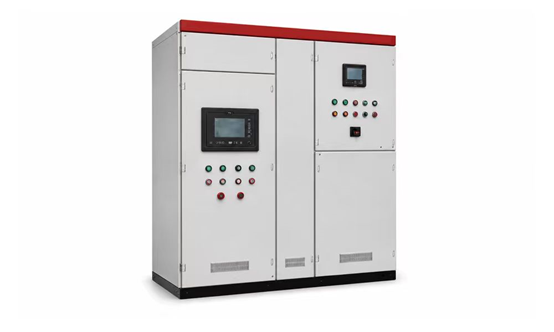
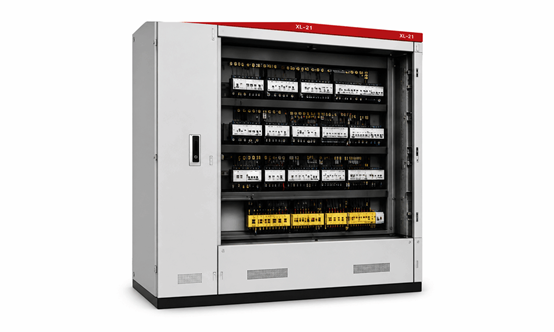
Lighting/power distribution cabinets are commonly deployed in the distribution systems of office buildings, shopping malls, and factories. They primarily distribute electrical energy to specific lighting or power circuits and provide circuit protection for the associated equipment. These cabinets offer multiple protection functions—including short-circuit, overload, and earth-leakage protection—and feature clear, logical circuit distribution, safety, reliability, ease of installation and maintenance, and broad applicability, thereby greatly facilitating daily power distribution management and servicing.
As a terminal power distribution unit, the cabinet’s protection relays focus primarily on circuit safety and personnel protection against electric shock. Core components include miniature or molded-case circuit breaker trip units (overcurrent/instantaneous protection, ANSI 50/51) to prevent overloads or phase-to-phase short circuits in branch lines; residual current monitor (RCD/ANSI 50N) to protect against electric shock and fires caused by insulation failure; and timing or light-controlled relays for the intelligent management of large-scale public lighting. Together, these components ensure safe protection and efficient operation of the power distribution system at the point of use.
Conclusion
From main incoming units and motor control centers to automated ATS and PLC panels, every power distribution switchgear relies on precise, synchronized relay protection to prevent costly downtime and catastrophic faults. At Sell-Best, we specialize in providing high-precision overcurrent, earth fault, differential, voltage, and motor protection relays designed to seamlessly integrate into modern switchgear configurations. Let Sell-Best empower your electrical infrastructure with maximum safety and uncompromised continuous power.