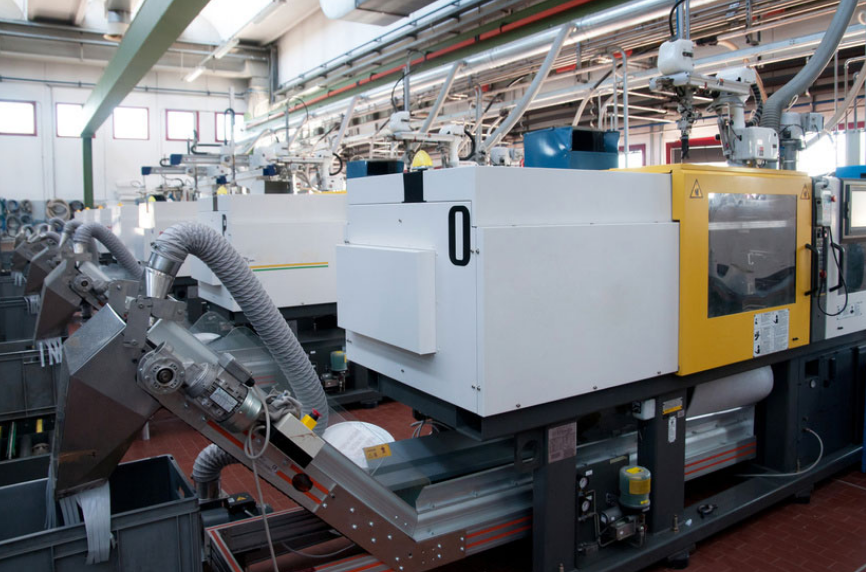
In numerous fields (eg, industrial automation, communication base stations, and data centers), electrical cabinets serve as the housing for electronic devices; consequently, their internal environment directly impacts the stable operation and service life of the equipment. Today, we will delve into the critical aspects of cabinet climate control—cooling, heating, and dehumidification—analyzing how these three key elements work in concert to ensure that equipment remains in an optimal operating state at all times.
The Importance of Cabinet Climate Control
Electronic equipment—particularly precision devices such as servers, PLCs, and variable frequency drives—generates a significant amount of heat during operation. When the internal temperature of an equipment cabinet exceeds the devices’ permissible operating range, it can lead to degraded performance of electronic components, a shortened service life, or even direct physical damage. Studies have shown that for every 10°C increase in operating temperature, the lifespan of electronic components is reduced by more than half—a principle known as the “10°C Rule.”
Humidity control is equally critical. Excessively high humidity can lead to the formation of condensation, causing circuit short circuits and the corrosion of metal components; conversely, excessively low humidity can generate static electricity, which may damage sensitive electronic components. In addition to temperature and humidity, other environmental factors—such as dust and corrosive gases—can also inflict damage upon the equipment.
An ideal internal cabinet environment should maintain a temperature between 0°C and 40°C, a relative humidity level between 40% and 60%, and remain free of condensation. Achieving this objective requires the synergistic operation of three key systems: cooling, heating, and dehumidification.
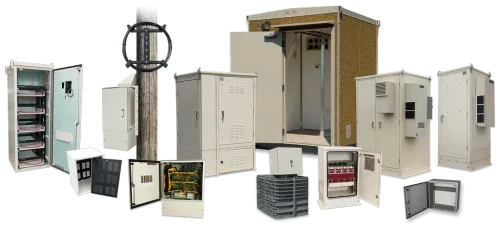
Heat Dissipation Working Principle & Solutions
Heat dissipation is, in essence, a process of heat transfer, primarily occurring through three mechanisms: conduction, convection, and radiation. Electrical cabinet cooling is based on these principles, employing various technical solutions to transfer internal heat to the external environment.
Natural Cooling: Achieves heat dissipation through the inherent thermal conductivity of the cabinet itself and natural air convection. This method is simple and economical, yet its cooling capacity is limited; it is suitable only for applications with low power density and favorable environmental conditions.
Forced Air Cooling: Utilizes enclosure fans to accelerate airflow, thereby enhancing convective heat transfer. This is currently the most widely adopted cooling method, offering high cost-effectiveness and suitability for most standard applications. This means installing electrical enclosure fans inside the electrical enclosures.
Air Conditioning/Refrigeration: Employs compressor-based or thermoelectric refrigeration systems to lower the internal temperature of the cabinet below the ambient temperature. This method is ideal for environments characterized by high power density, high temperatures, and high humidity. This means installing an air conditioner for electrical enclosure.
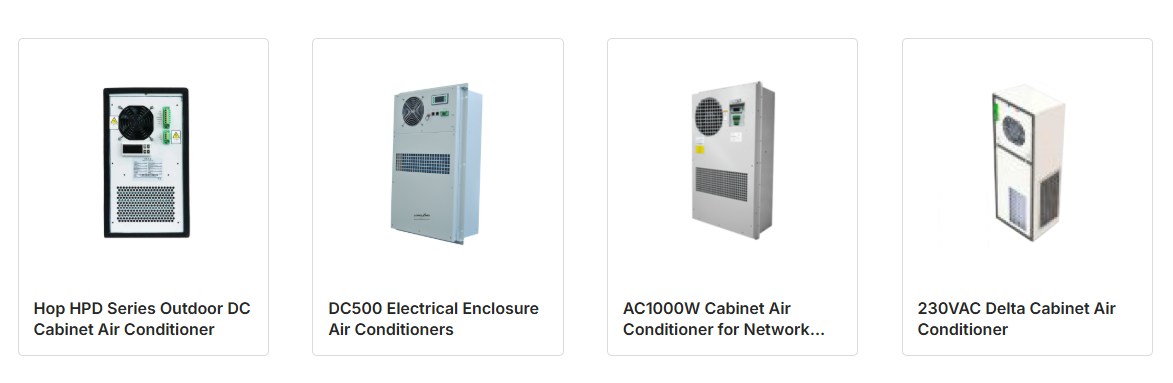
Liquid Cooling: Circulates a liquid medium to carry away heat, offering extremely high cooling efficiency. It is primarily utilized in applications with ultra-high power density, such as high-performance computing systems and power electronic converters.
Consideration for selecting the Heat Dissipation solution
When selecting a cooling solution, several factors must be taken into consideration:
1. Thermal Load: This directly determines the required cooling capacity. Accurately calculating the total heat generated by the equipment is a fundamental prerequisite; this value is typically expressed in Watts (W). In practical calculations, one must sum the maximum heat output of all heat-generating components and incorporate a safety margin of 20% to 30%.
2. Environmental Conditions: These include ambient temperature, humidity levels, altitude, and other factors. High-temperature environments necessitate greater cooling capacity; high-humidity environments require measures to prevent condensation; and high-altitude regions, where the air is thinner, may experience reduced effectiveness in air-cooling systems.
3. Electrical Cabinet Protection Rating: Indicated by an IP Code (e.g., IP54, IP65). A higher protection rating signifies superior sealing capabilities, yet it also presents greater challenges for thermal design. Cabinets with high protection ratings typically require specialized cooling devices, such as cabinet air conditioners or heat exchangers.
4. Cost and Maintenance: These factors encompass initial capital investment, operational energy consumption, and ongoing maintenance costs. Natural cooling offers the lowest cost but has limited capacity; forced air cooling provides excellent cost-effectiveness; air conditioning delivers effective cooling but incurs high energy consumption; and liquid cooling offers the highest efficiency but involves greater system complexity and higher costs.
Electrical Cabinet Heating Causes & Solutions
Why electrical cabinet need heating?
In cold environments, electrical cabinets not only do not require cooling but may actually require heating. The primary reasons for this include:
Low-Temperature Protection: The minimum operating temperature for most electronic devices is 0°C or -20°C. When the ambient temperature falls below this threshold, the equipment may fail to start up or operate normally.
Condensation Prevention: When the internal temperature of the cabinet drops below the dew point of the ambient air, condensation forms on the surfaces of the equipment, leading to issues such as short circuits and corrosion. By heating the cabinet interior to a temperature above the dew point, condensation can be effectively prevented.
Performance Assurance: The performance of certain electronic components varies with temperature fluctuations—for instance, crystal oscillators may experience frequency drift, and liquid crystal displays (LCDs) may exhibit slowed response times.
Electrical Cabinet Heating Solutions and Considerations
Electric Enclosure Heaters: The most common solution for electrical cabinet heating, generating heat through electrical resistance. There are two primary types:
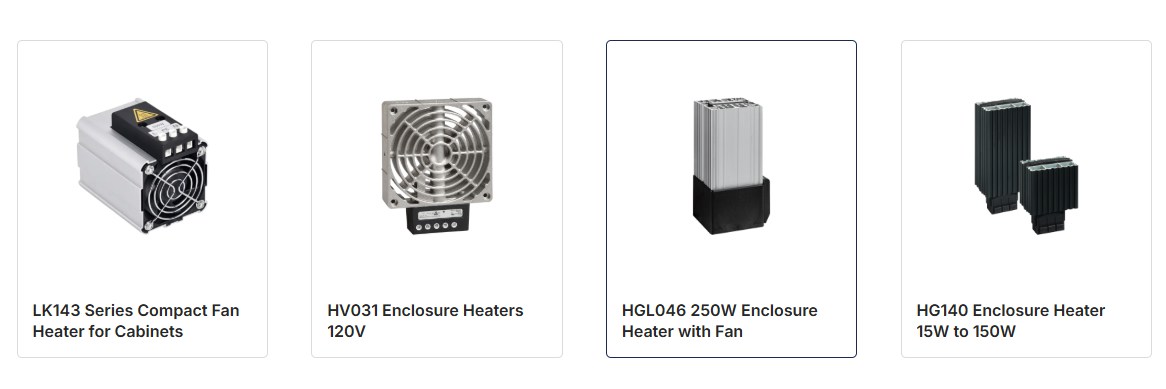
Convection Heaters: These heat the air within the cabinet, creating natural convection currents to ensure uniform heating throughout the interior.
Radiant Heaters: These radiate heat directly toward the equipment and the surrounding space, offering high heating efficiency.
Heat Exchangers: These isolate the cabinet’s interior from the external environment while transferring external heat into the cabinet via a fluid medium or specialized thermal-conduction mechanisms. …section, suitable for use in hazardous environments and applications requiring a high degree of ingress protection.
PTC Heater: Utilizes Positive Temperature Coefficient (PTC) materials; as the temperature rises, the electrical resistance increases, causing the power output to decrease automatically. Characterized by self-regulating temperature control and high safety standards, it is an ideal heating solution for electrical cabinets.
Power Calculation: The required heating power must compensate for heat loss from the cabinet and provide the necessary temperature rise for the internal equipment.
The calculation formula is: P = K × A × ΔT
Where P represents the heating power (W), K represents the cabinet’s heat transfer coefficient (W/m²·℃), A represents the cabinet’s surface area (m²), and ΔT represents the temperature difference between the interior and exterior of the cabinet (℃). In practical applications, heating time requirements must also be taken into consideration.
Installation Position: The heater should be installed in the lower section of the cabinet to utilize the natural convection of rising hot air for uniform heating. Avoid directing heat directly toward sensitive equipment; if multiple heaters are used, they should be distributed evenly throughout the cabinet.
Control Strategy: Employ a temperature and humidity controller to automatically activate or deactivate the heater based on the internal cabinet temperature. Set an appropriate hysteresis (deadband) to prevent frequent switching cycles, and integrate the heating system with the ventilation system to avoid energy waste.
Safety Considerations: The surface temperature of the heater must not become excessively high, generally not exceeding 80℃. The unit must incorporate an overheat protection function. Furthermore, the heater’s construction materials must be flame-retardant and comply with the UL94 V-0 standard.
Hazards of Electrical Cabinet Humidity & Dehumidification Solutions
Electrical enclosure humidity issues are often overlooked, yet their detrimental effects are equally severe:
Condensation: When a surface temperature drops below the air’s dew point, water droplets form through condensation. Condensation can lead to malfunctions such as circuit short circuits, poor electrical contact, and metal corrosion.
High-Humidity Corrosion: A prolonged high-humidity environment accelerates the corrosion of metal components and the oxidation of electrical contacts, resulting in increased contact resistance and degraded signal transmission quality.
Mold Growth: When humidity levels exceed 60%, mold growth becomes prevalent; this can lead to the deterioration of insulation materials and electrical leakage within circuits.
Static Electricity Hazards: Conversely, when humidity levels are too low (below 40%), static electricity is easily generated, posing a risk of damage to sensitive electronic components.
Dehumidification Solutions for Electrical Enclosures
Heating-based Anti-Condensation: This method involves heating the cabinet interior to maintain a temperature consistently above the ambient dew point, thereby preventing the formation of condensation. It is the simplest and most economical anti-condensation method; however, it does not reduce the absolute humidity of the air and entails relatively high energy consumption.
Mechanical Refrigeration Dehumidification: This technique utilizes a compressor to cool the air, causing water vapor to condense and be expelled, thereby reducing the absolute humidity. It offers effective dehumidification results, but the system is complex, the cost is high, and its efficiency is limited in low-temperature environments.
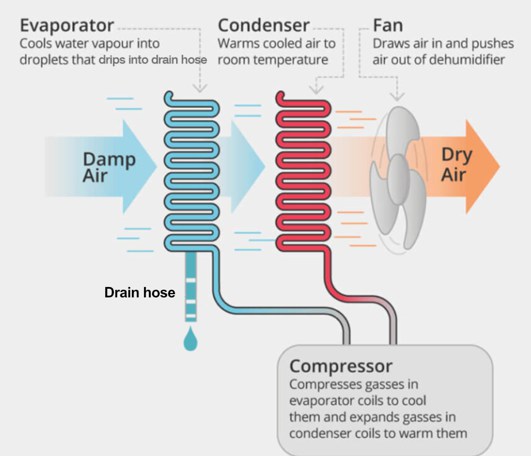
Desiccant Rotor Dehumidification: This method employs hygroscopic materials (such as silica gel or molecular sieves) mounted on a rotating wheel to adsorb moisture from the air, followed by a heating process to regenerate the desiccant material. It boasts high dehumidification efficiency and is unaffected by ambient temperature fluctuations; however, the equipment tends to be bulky and consumes a significant amount of energy.
Membrane-based Dehumidification: This technology utilizes specialized selectively permeable membranes that allow only water vapor to pass through, thereby achieving the drying of the air/gas stream. It is a relatively new technology featuring simple equipment design, though the current implementation costs remain relatively high.
Semiconductor Dehumidification: Based on the Peltier effect, this method employs thermoelectric semiconductor couples to cool a surface, causing water vapor to condense upon it. It features a compact footprint, contains no moving parts, offers high reliability, and is particularly well-suited for use in small-scale cabinets.
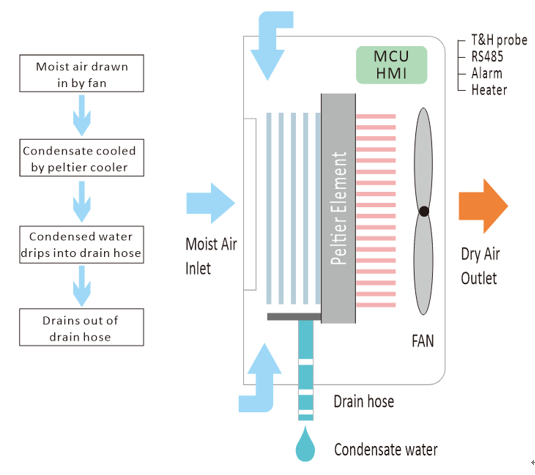
Peltier dehumidification working principle
In communication Base Station Cabinets, people typically employ a combination of heating-based anti-condensation and intelligent ventilation systems to ensure both effective heat dissipation and the prevention of condensation.
Electrical cabinets in Coastal Industrial Facilities often utilize desiccant rotor dehumidifiers to effectively combat the corrosive effects of high-humidity environments.
Power Control Cabinets: frequently utilize semiconductor dehumidification devices, which are quiet, highly reliable, and require minimal maintenance.
Conclusion
Electrical cabinet cooling, heating, and dehumidification constitute the three pillars for ensuring the reliable operation of equipment. In practical engineering applications, it is essential to select appropriate solutions and technologies—based on specific application scenarios, equipment requirements, and environmental conditions—and to seamlessly integrate them through intelligent control systems, thereby establishing a safe, reliable, and efficient operating environment for the equipment.