Phase voltage and line voltage are two fundamental concepts in three-phase electrical systems, and the relationship between them is indeed easily confused. This article briefly introduces the difference between phase voltage and line voltage.
What is phase voltage?
Phase voltage refers to the voltage between any single phase (live wire) and the neutral wire in a three-phase circuit. In low-voltage power supply systems, the phase voltage is typically 220V. Household lighting and appliances generally operate on this 220V phase voltage.
What is line voltage?
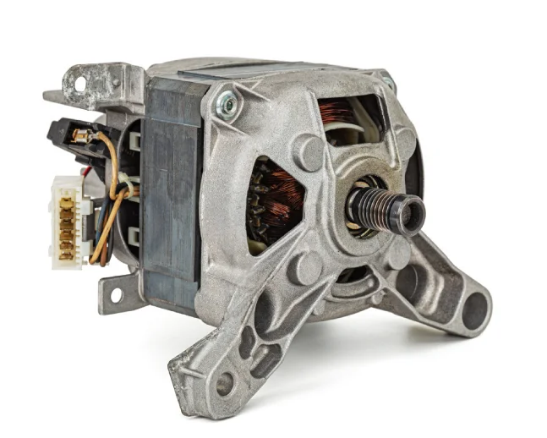
Line voltage refers to the voltage between any two phase wires (live wires) in a three-phase circuit. In low-voltage power supply systems, the line voltage is typically 380V. Large industrial equipment—such as electric motors, water pumps, air compressors, and industrial air conditioning units—typically connects to a 380V three-phase power supply.
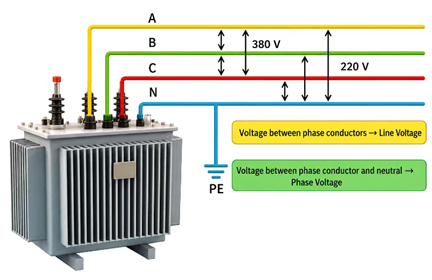
Difference between phase voltage and line voltage
In the standard three-phase electric system, there is a fixed mathematical system: wire = phase x √3, but there are two types that are different.
Number of different types
Different connection methods can be used to export different electronics. Unstar-shaped connection (Y-shape) exists neutral wire, can be the same time output signal (fire line – zero wire) and Japanese wire (fire line – fire line).
When connected to a three-phase power star (Y), the amount of power shown below is shown. The phase quantity can be found: The number of wires can be found in the equilateral triangle. U, V line voltage:
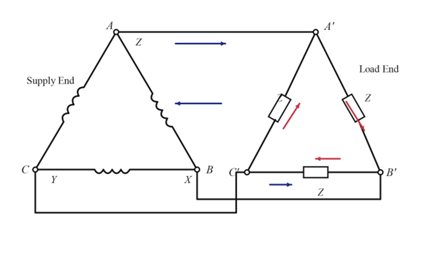
When it is called as a wireless phone, it is also called as a wireless phone.
U line = √3 × U phase
Triangular connection (Δ type) Neutral wire with no neutral wire, wire wire = compatible wire. When three-phase power source star shape (△) connects, each phase conductor is both directly connected to the top of the three-phase conductor, so the wire is wire, the Japanese phase is wire, etc., so U wire = U phase.
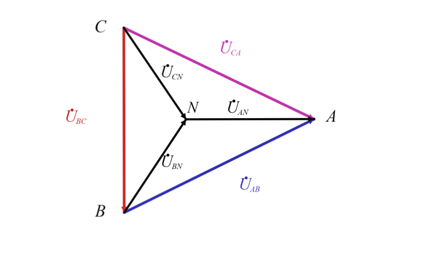
Different Physical Significance
Phase voltage represents the potential difference across a single-phase load or power source; it is used to power single-phase equipment (such as household appliances).
Line voltage represents the potential difference between two phases; it is primarily used to power three-phase equipment (such as electric motors and large-scale industrial machinery).
Different Applications
Phase voltage is commonly used in residential settings, such as for household lighting and powering small appliances.
Line voltage is typically used in industrial applications and for powering heavy-duty equipment, as it offers higher power output and greater driving capability.
Conclusion In short, phase voltage is the voltage between a single phase and the neutral line, while line voltage is the voltage between two phases; the two differ in terms of numerical value, application, and connection method.