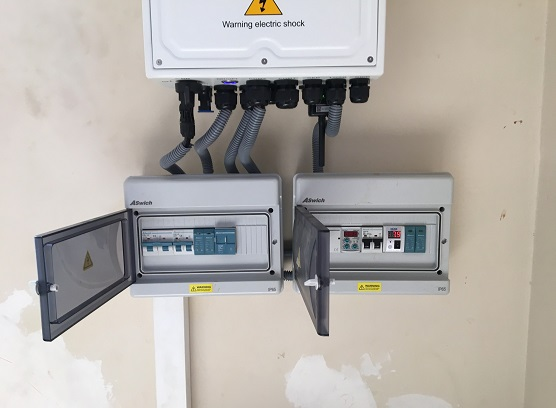
Earth Leakage Current Protection requierments Coal Mine Safety
According to relevant coal mine regulations, for 6000V and above high-voltage power grids in mines, measures must be taken to limit the single-phase grounding capacitive current: no more than 20A for operating mines and no more than 10A for newly built mines. High-voltage feeders to above-ground and underground substations must have selective single-phase grounding protection; high-voltage feeders supplying power to mobile substations and motors must have selective tripping single-phase grounding protection. Low-voltage feeders underground must be equipped with earth leakage detection protection devices or selective earth leakage protection devices to ensure automatic disconnection of leaking feeder lines.
A tripping test must be performed on low-voltage earth leakage protection devices once a day. Coal drills must use integrated protection devices with leakage detection, leakage current interlocking, short circuit, overload, phase loss, and remote control functions. A tripping test must be performed on the integrated protection device of the coal drill before each shift. Coal drills are prohibited in outburst-prone mines, except when sampling for coal seam outburst parameters.
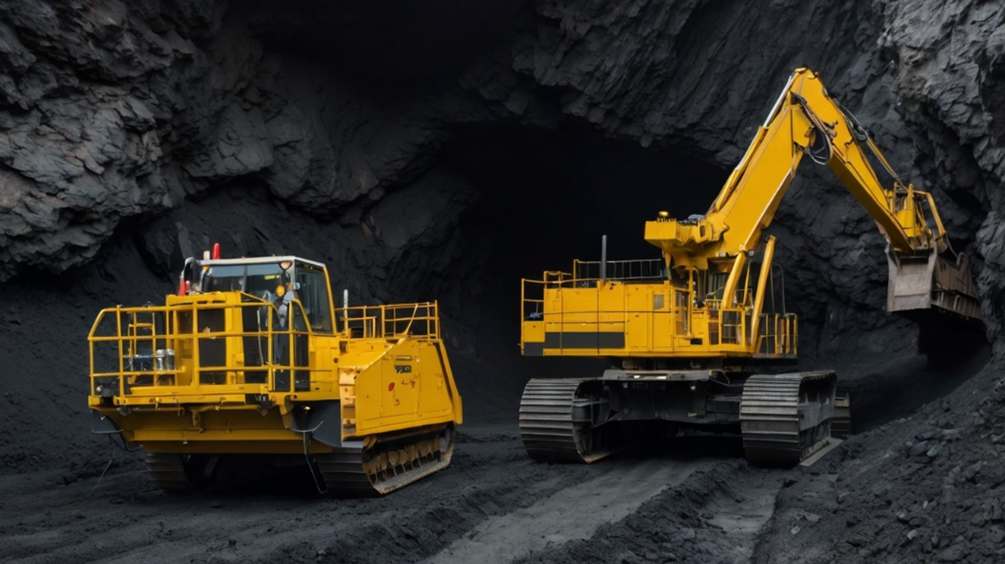
Earth Leakage Protection Regulations for High and Low Voltage Feeder Lines
According to relevant regulations on power supply and distribution in coal mines, the protection devices installed on the high-voltage feeder lines of underground substations shall comply with the following regulations: 1. Selective single-phase grounding protection devices must be installed on the high-voltage feeder lines, and these devices should function as signals. When a single-phase grounding fault endangers the safety of personnel, equipment, and the power supply and distribution system, the protection device should trip; 2. For high-voltage feeder lines supplying mobile substations, in addition to the mandatory installation of selective single-phase grounding protection devices that trip, cable insulation monitoring and protection devices functioning as signals should also be installed;
The protection devices installed on the low-voltage feeder lines underground shall comply with the following regulations: 1. For low-voltage feeder lines of underground substations, in addition to short-circuit and overload protection devices, In addition to protective devices, leakage protection devices or selective leakage protection devices (including manual bypass devices) must be installed to ensure automatic disconnection of the leaking feeder line in the event of a leakage accident.
Low-voltage feeder lines underground must be equipped with leakage protection devices or selective leakage protection devices capable of automatically disconnecting the leakage circuit. A weekly test of the low-voltage leakage protection is required. The low-voltage tripping test cycle has been changed from daily to weekly. This is based on the fact that current low-voltage electrical equipment protection uses digital microcomputer protection devices, which are stable and reliable, displaying various parameters in real time, including insulation status. Furthermore, reducing the test frequency decreases the number of leakage protection trips, reducing the impact range during testing, which is also a form of protection for the electrical equipment.
Types of Earth Leakage in Coal Mines
Earth Leakage refers to an electrical fault in a power grid where the transformer neutral point is not grounded, resulting in a single-phase grounding (direct grounding or impedance grounding) or a reduction in the total insulation resistance of two or three phases to ground to a dangerous value. contact with a live conductor in a single phase, which is a single-phase grounding through resistance, also constitutes leakage.
Based on the actual conditions of underground power grids in coal mines, leakage can be divided into two categories: concentrated leakage and decentralized leakage.
Concentrated leakage refers to leakage caused by insulation damage at a specific point or location within the power grid, with a clear leakage fault point. Decentralized leakage refers to leakage caused by a reduction in the insulation resistance to ground of the entire power grid or a specific line, without a clearly identifiable leakage fault point.
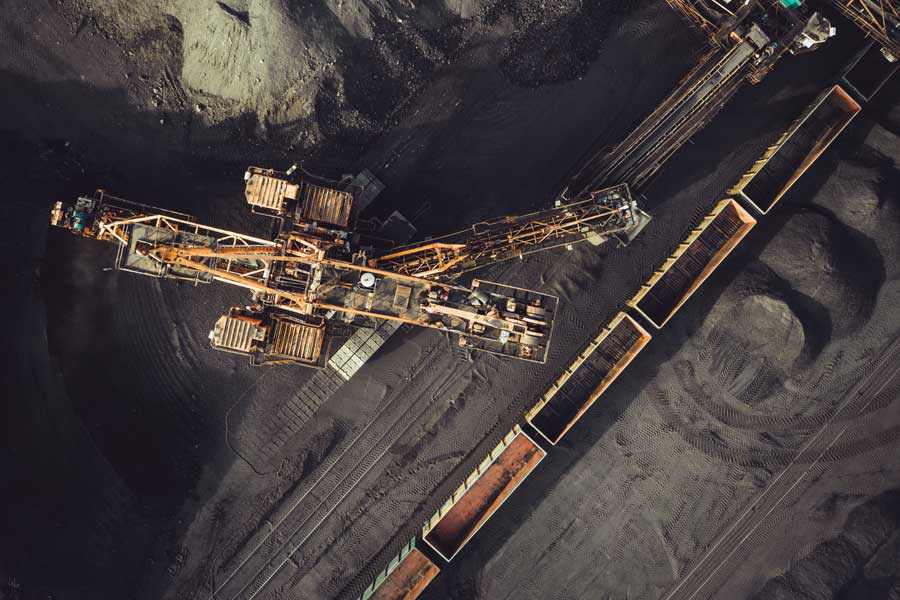
Main Causes of electrical earth leakage in underground equipment
(1) Long-term overload operation of electrical equipment or cables causes insulation aging.
(2) Dampness or water ingress into operating cables or electrical equipment causes the insulation between phases or between phase and ground (outer shell) to drop to a dangerous level.
(3) Aging, damage, or improper connection of the phase wire insulation inside the cable or electrical equipment causes the joint to loosen and fall off, allowing one phase live wire to touch the metal outer shell.
(4) Improper connection of rubber-sheathed cables, resulting in “chicken claws,” “sheep tails,” and “exposed joints.”
(5) Using metal wire to suspend the rubber-sheathed cable, causing it to embed inside the insulation layer and contact the core wire.
(6) Incorrect connection of the conductive core wire and ground wire during wiring.
(7) Damage to the sheath insulation of the rubber-sheathed cable due to impact, crushing, or excessive bending during operation.
(8) Cracks or gaps in the cable caused by long-term excessive bending allow moisture or water to intrude during operation. (9) During equipment maintenance, errors in power-off or power-on operations, live-line work, or carelessness can cause personnel to come into contact with one phase, resulting in leakage.
(10) Adding electrical components arbitrarily to electrical equipment, or leaving tools or other conductors inside the equipment during maintenance, can cause the electrical clearance to be less than the specified value, leading to one phase discharging to the outer casing.
(11) Arcing to ground can occur during the operation of electrical equipment.
(12) Severe overvoltage can occur, breaking down the insulation of cables or electrical equipment to ground.
Hazards of Earth Leakage in Coal Mines
(1) The electric sparks generated by leakage can cause gas and coal dust explosions.
(2) When a person touches the leakage point of equipment or cable, there is a risk of electric shock.
(3) Prolonged leakage can cause insulation to heat up, age, and even cause phase-to-phase short circuits and electrical fires.
(4) A voltage drop will occur along the path of the leakage current. When the leads of the electric detonator come into contact with two points with a potential difference on the leakage path, the electric detonator may detonate prematurely. The hazards of electrical leakage are extremely serious. To prevent leakage faults from harming workers and equipment, measures must be taken to prevent leakage accidents. Therefore, in addition to the rational selection and use of electrical equipment, it is also necessary to strengthen the daily maintenance and operation monitoring of electrical equipment and power grid lines, and actively carry out preventive maintenance work. At the same time, leakage protection devices must be installed in the underground power grid.
Coal Mine Leakage Protection Devices
Common leakage protection devices in underground coal mine power supply systems include: non-selective leakage protection devices, selective leakage protection devices, and leakage interlocking devices.
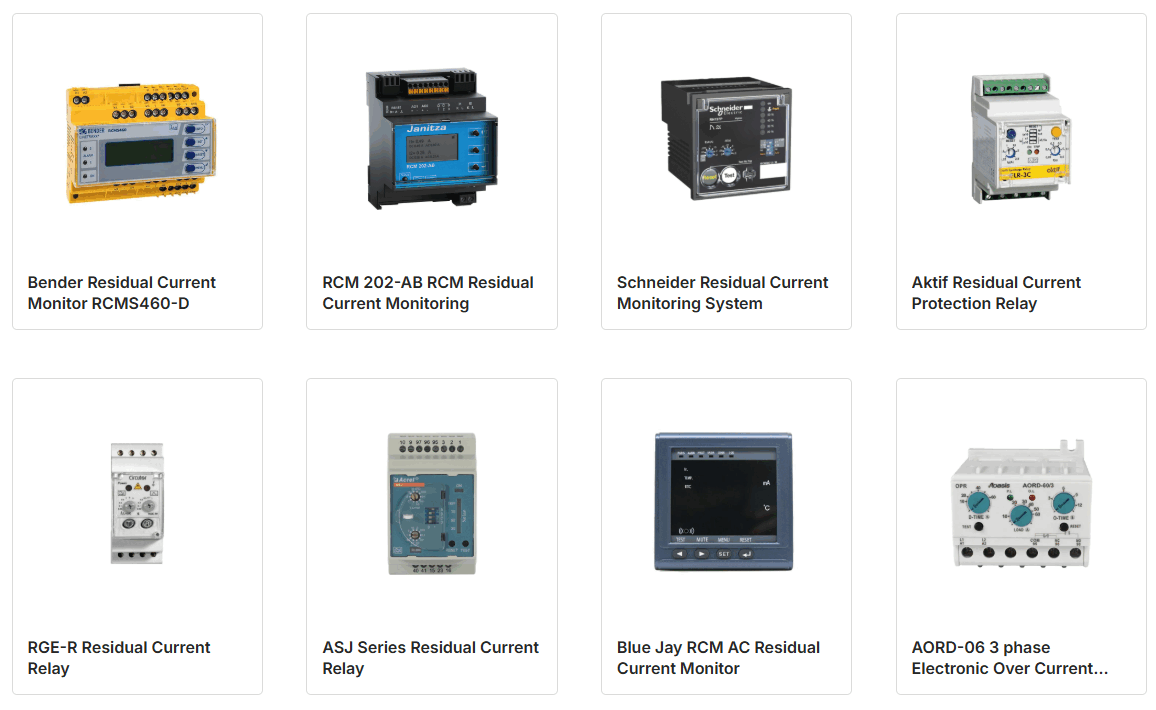
1. Non-selective Leakage Protection Devices: Non-selective leakage protection devices generally adopt the principle of supplementary DC power supply protection and can only be installed at the main feeder switch on the low-voltage side of the transformer. When earth leakage occurs at any point in the low-voltage power grid or the total insulation resistance of the low-voltage power grid to ground drops to the operating resistance value of the leakage protection device, it will cause the main switch to trip, causing a power outage in the entire low-voltage power grid, thus providing protection. The disadvantage of this type of protection device is that the power outage area is large and the fault point is difficult to locate.
2. Selective Residual Current Device (RCD): Selective RCDs generally employ the zero-sequence current directional protection principle and are installed at the branch circuit switches controlled by the main feeder switch on the low-voltage side of the transformer. When a leakage fault occurs in the power grid controlled by the branch circuit switch, it can distinguish between the faulty and non-faulty lines, selectively issuing a fault signal and cutting off the power supply to the faulty line, while the non-faulty parts continue to be powered, thus selectively cutting off the faulty line. This protection device narrows the power outage area, facilitates the location of the leakage fault point, and improves the reliability of power supply.
3. Residual Current Interlocking Device: Residual current interlocking devices, also known as earth leakage detection relays, generally employ the additional DC power supply protection principle and are installed in integrated protection devices for lighting signals, coal drills, motors, and low-voltage electromagnetic starters. Before the switch is closed, the residual current interlocking device monitors the insulation condition of the power grid. When the insulation resistance of the power grid to ground is lower than the specified interlocking resistance value, the switch cannot be closed, thus achieving the interlocking function.
Earth Leakage Current Protection for High-Voltage Power Grids
The main earth leakage current protection principles applicable to high-voltage power grids in coal mines include:
- zero-sequence voltage protection principle;
- zero-sequence current protection principle;
- zero-sequence power direction protection principle;
- harmonic current direction principle;
- first half-wave principle;
- injection signal method;
- zero-sequence current active component direction protection principle.
Currently, earth leakage current protection used in underground coal mines mainly adopts two protection principles: zero-sequence power direction and harmonic current direction.
Earth Leakage Current Protection for Low-Voltage Power Grids
Earth Leakage current protection prevents electric shock and the ignition of gas and coal dust by the leakage current through the operation of cutting off the power supply to the low-voltage power grid in underground coal mines.
The leakage current protection principles applicable to low-voltage power grids underground include:
- supplementary DC power supply protection principle;
- zero-sequence power direction principle;
- zero-sequence current principle;
- bypass grounding protection principle.
Currently, earth leakage current protection devices used in low-voltage power grids in underground coal mines mainly adopt the supplementary DC power supply protection principle and the zero-sequence power direction principle.