Solar inverters are a critical component of photovoltaic (PV) power systems, responsible for converting direct current (DC) generated by solar modules into alternating current (AC) suitable for grid connection or local consumption. Beyond simple DC–AC conversion, modern inverters integrate functions such as maximum power point tracking (MPPT), grid synchronization, system monitoring, and power management. Depending on system scale, application scenario, and energy management requirements, several inverter topologies are widely used in the solar industry. This article will introduce the six solar inverter types for you.
1. String Inverters
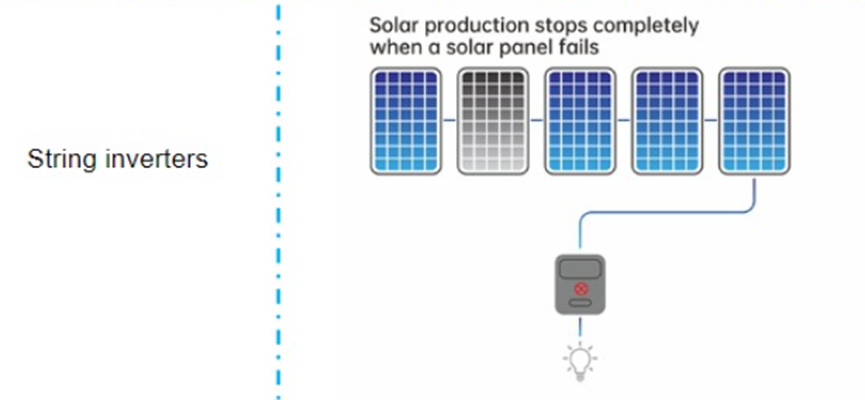
String inverters are the most commonly deployed inverter type in residential and small-to-medium commercial PV systems. In this configuration, multiple PV modules are connected in series to form a string, and one or more strings are connected to a single inverter.
String inverters typically include one or more MPPT channels, allowing optimization at the string level. Their key advantages include relatively low cost, mature technology, high efficiency, and ease of maintenance. However, performance may be affected by partial shading or module mismatch within the same string, as the entire string operates based on the weakest module.
2. Microinverters
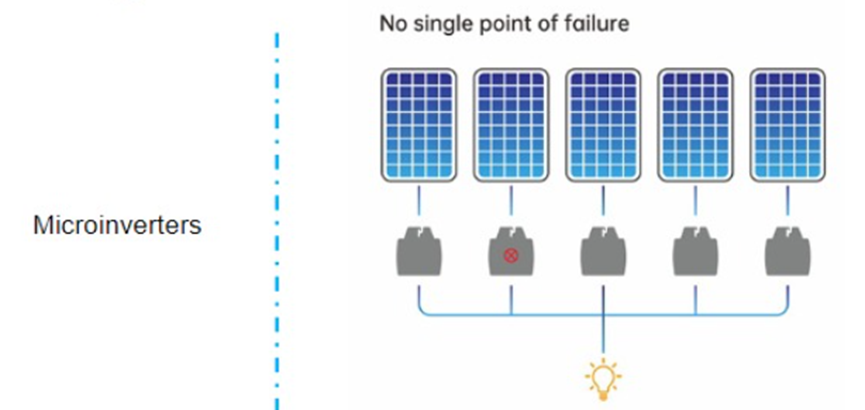
Microinverters are installed directly on individual PV modules, enabling module-level DC–AC conversion and MPPT. Each panel operates independently, eliminating mismatch losses caused by shading, soiling, or aging differences.
This architecture offers enhanced energy yield, detailed module-level monitoring, and improved system flexibility. Microinverters are particularly suitable for complex rooftops or systems with shading challenges. Their higher upfront cost and increased number of electronic components are the primary trade-offs compared to string inverter solutions.
3. Hybrid Inverters
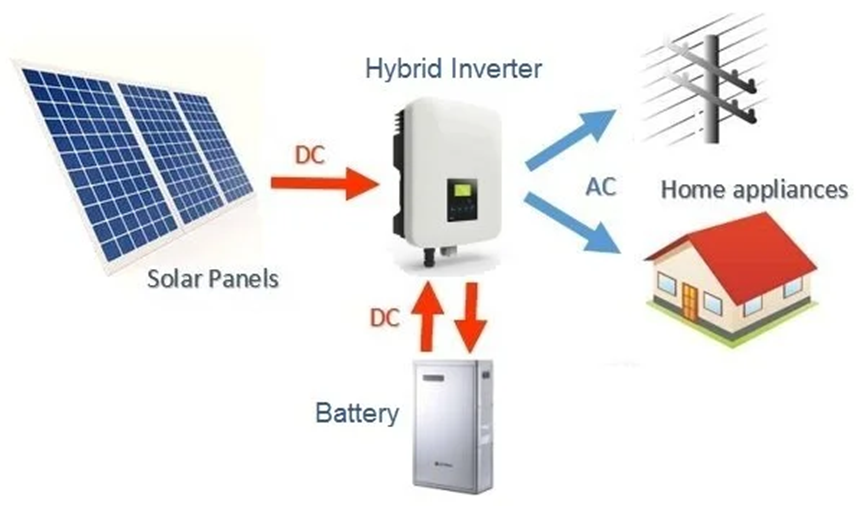
Hybrid inverters combine the functions of a traditional solar inverter and a battery inverter in a single device. They are designed to manage power flow between PV arrays, energy storage systems, the grid, and local loads.
Hybrid inverters enable self-consumption optimization, backup power operation, and peak shaving by intelligently charging and discharging batteries. They are widely used in residential and commercial systems aiming for energy independence, resilience against outages, or dynamic energy management based on time-of-use tariffs.
4. Power Optimizers
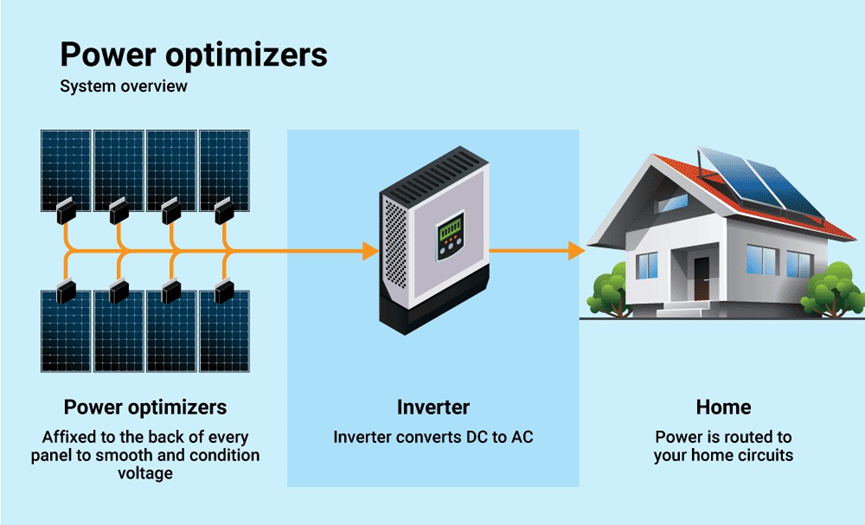
Power optimizers are DC-side devices installed at the module level and paired with a centralized or string inverter. Each optimizer performs module-level MPPT while the inverter handles DC–AC conversion.
This approach improves energy harvest under shading or mismatch conditions while maintaining a centralized inverter architecture. Power optimizer systems strike a balance between the simplicity of string inverters and the performance benefits of microinverters, and are commonly used in residential and commercial installations requiring enhanced monitoring and optimization.
5. Central Inverters
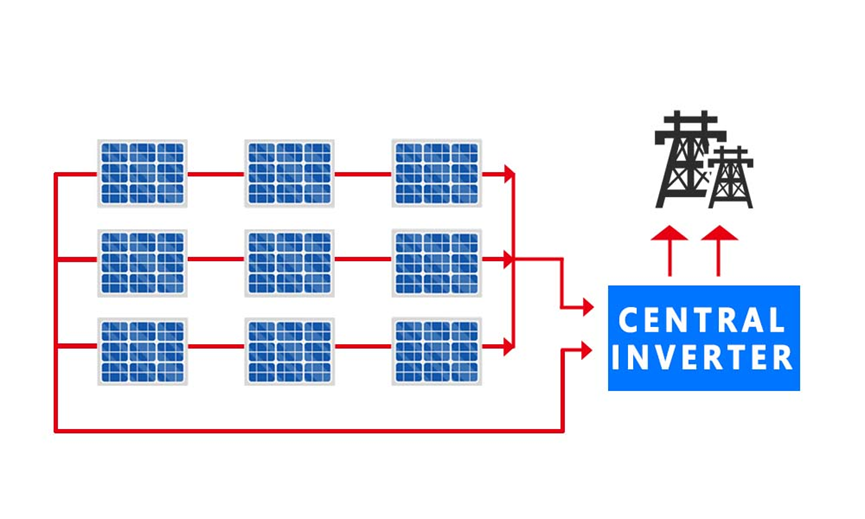
Central inverters are high-capacity inverters designed for utility-scale solar power plants, with power ratings typically ranging from hundreds of kilowatts to several megawatts. Multiple PV strings or combiner boxes feed into a single inverter unit.
They offer high efficiency, lower cost per watt, and simplified grid integration for large-scale projects. However, central inverters provide limited granularity in MPPT and system monitoring, and a single inverter failure can affect a large portion of the plant’s output. As a result, redundancy and robust maintenance strategies are essential.
6. Battery-Based Inverters
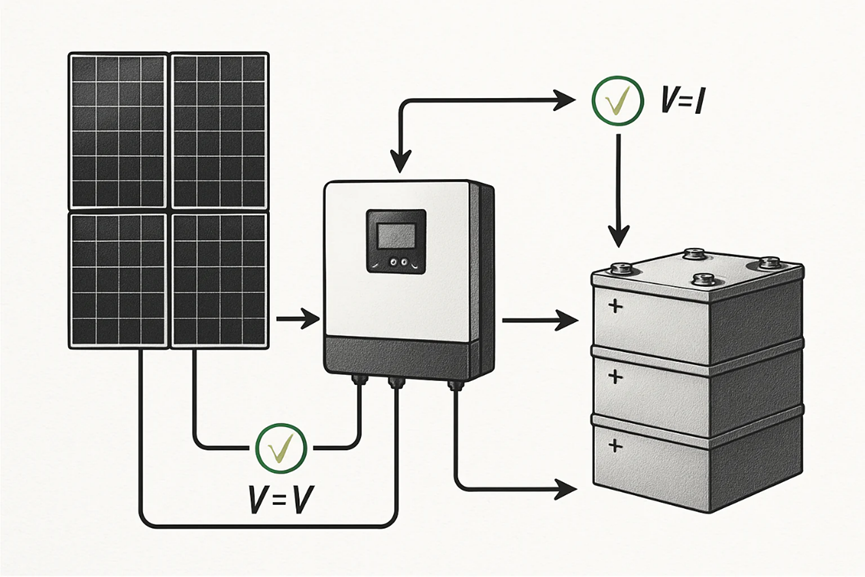
Battery-based inverters, also known as off-grid or standalone inverters, are primarily used in systems where grid access is unavailable or unreliable. These inverters manage battery charging from PV sources or auxiliary generators and supply AC power to loads independently of the utility grid.
They are essential in remote installations, microgrids, and backup power systems. Advanced battery-based inverters can operate in both off-grid and grid-tied modes, offering seamless transition during outages and supporting hybrid energy architectures.
Conclusion
Each solar inverter type serves specific technical and operational requirements, from module-level optimization to utility-scale power conversion and integrated energy storage management. Selecting the appropriate inverter architecture requires careful consideration of system size, grid interaction, shading conditions, reliability needs, and long-term energy strategy. As solar technology continues to evolve, inverter systems are increasingly becoming intelligent energy management platforms rather than simple power conversion devices.