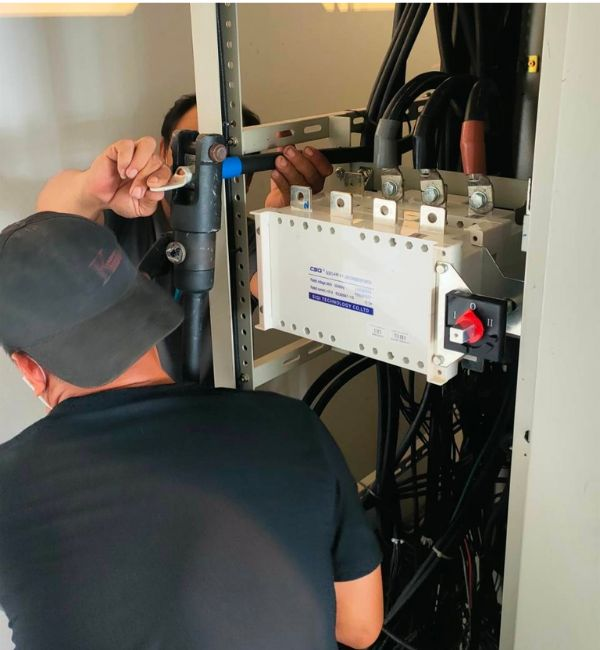
In high-humidity environments, condensation often forms inside switchgear cabinets, leading to degraded insulation performance, corrosion of secondary terminals, and even triggering protection malfunctions or accidental tripping incidents. Traditionally, we have relied on methods such as electric heaters, compressor-based dehumidifiers, or silica gel desiccants to dehumidify switchgear cabinets. However, these methods merely treat the symptoms rather than the root cause, as they fail to effectively expel moisture from the enclosure.
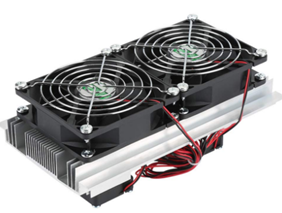
To ensure that the interior of a switchgear cabinet remains consistently dry, a new dehumidification approach has emerged: Semiconductor Refrigeration (also known as Thermo-Electric Cooling, or the Peltier effect) technology.
Why Traditional Dehumidification Methods Are Ineffective
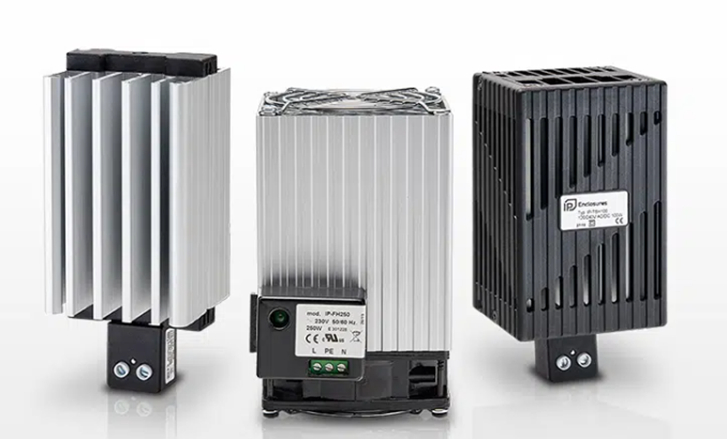
Electric enclosure Heaters: These rely on raising the temperature to “evaporate” moisture. While the cabinet interior may appear dry, the moisture actually remains trapped inside, merely circulating within the enclosure. Once the temperature drops, this moisture re-condenses; thus, true dehumidification is never achieved.
Silica Gel / Desiccants: These employ a passive adsorption mechanism. Not only is their moisture-absorption capacity limited, but they also require manual replacement, making it difficult to achieve automated, continuous humidity control.

Small Compressor-Based Dehumidifiers: Although they offer a certain degree of dehumidification effectiveness, they suffer from significant drawbacks: they are difficult to integrate into small switchgear cabinets with limited internal space; they generate high operating noise levels (typically exceeding 65 dB), which can cause interference; and they rely on fluorinated refrigerants, which do not align with green and eco-friendly principles.
TEC Dehumidifiers – Utilizing Semiconductor Cooling Chips for Active Moisture Drainage
The core component of TEC dehumidifier is the semiconductor cooling chip. Its operating principle is based on the Peltier effect: when an electric current is applied, one side of the chip cools down while the other side heats up. By integrating this chip into a switchgear cabinet, an intelligent condensation-based dehumidification system can be established.
The complete system consists of four distinct layers:
1. Sensing Layer: High-precision humidity probes continuously monitor the internal environment of the cabinet 24 hours a day.
2. Control Layer: An intelligent MCU controller is pre-configured with start and stop thresholds (e.g., automatically activating when humidity exceeds 60% RH) to ensure on-demand dehumidification.
3. Execution Layer: Cold Side: A semiconductor thermoelectric cooler (TEC) combined with aluminum fins creates a low-temperature condensation surface, causing moisture within the cabinet to rapidly liquefy into water droplets. Hot Side: Heat sinks and a silent fan efficiently dissipate heat out of the cabinet. Drainage: Condensed water flows into a collection trough and is discharged outside the cabinet via a silicone hose, thereby completely eliminating secondary evaporation.
4. Communication Layer: Supports the RS485/Modbus-RTU protocol, enabling the remote uploading of humidity data, device status, and fault status to a substation monitoring platform, thereby facilitating intelligent operation and maintenance management. In summary, the TEC dehumidification solution requires neither refrigerants nor moving parts; it offers advantages such as ease of integration, silent operation, environmental friendliness, and high reliability, making it a solution specifically tailored for enclosed spaces such as power switchgear cabinets.
TEC Dehumidifiers vs. Traditional Dehumidification Methods
| Dehumidification Method | TEC Dehumidifier | Traditional Heater | Compressor Dehumidifier |
| Working Principle | Condensation-based, Active Drainage | Thermal Evaporation | Condensation, Active Drainage |
| Power Consumption | 30–60 W | 100–200 W | 200–500 W |
| Noise Level | <40 dB | 0 dB | 50–60 dB |
| Environmental Friendliness | Eco-friendly & Low-Carbon | High Power Consumption | Uses Fluorinated Refrigerant |
| Dimensions | 0.8 L | 0.3 L | 8–15 L |
| Maintenance Cycle | >5 Years | 2–3 Years | 1–2 Years |
Taking a 4 m³ switchgear cabinet as an example, and assuming an annual operating time of 8,000 hours: Compressor-based dehumidifier (300 W): Annual power consumption of 2,400 kWh. Traditional heater (150 W): Annual power consumption of 1,200 kWh. TEC dehumidification module (60 W): Annual power consumption of 480 kWh.
Based on an electricity rate of 0.8 RMB/kWh, utilizing the TEC dehumidification module results in an annual electricity cost saving of 576 RMB per unit (compared to a traditional heater) and an annual reduction in carbon emissions of 576 kg of CO₂ (compared to a traditional heater)—an environmental benefit equivalent to planting 30 trees.
Blue Jay Case Study: Results of TEC Dehumidification Retrofit for a 4m³ Medium-Voltage Switchgear Cabinet
Project Information:
- Equipment: 10kV Medium-Voltage Switchgear Cabinet; internal volume approx. 4m³
- Setting: Substation located in a high-humidity region of Southern China; during the rainy season, humidity consistently exceeds 85% RH.
- Problem: Persistent internal condensation; water droplets adhering to busbars and terminal blocks.
- Retrofit Solution: Installation of a TEC (Thermoelectric Cooling) semiconductor active dehumidifier.
- Test Period: 30 days of continuous operation.
Before Installing the TEC Dehumidifier (Initial Conditions)
- Humidity Status
Internal relative humidity consistently hovered between 78% and 92% RH—far exceeding the safe operating range for electrical equipment.
- On-site Observations
Extensive condensation and visible water droplets on cabinet walls, insulators, and terminal blocks.
Oxidation and corrosion of secondary circuit terminals, leading to increased contact resistance.
Significant degradation of insulation performance, creating risks of protection system malfunctions and nuisance tripping.
During the rainy season, manual cabinet opening, drying, and wiping were required almost every week.
- Original Solution
A traditional 150W heater was employed; however, it could only raise the temperature but could not remove moisture, resulting in recurring condensation.
After Installing the TEC Dehumidifier (Actual Results)
- Humidity Control
Humidity levels dropped rapidly within 2 hours and stabilized within the 45%–55% RH range (the optimal safety zone for electrical cabinets).
- On-site Improvements
Condensation vanished completely, leaving the cabinet interior dry and moisture-free.
Terminals, insulators, and copper busbars remained free of corrosion and moisture damage.
Insulation performance returned to normal levels; no tripping incidents or abnormal alarms occurred.
- Operational Performance
Fully automatic operation requiring no manual maintenance.
Silent operation (<30dB) with no noise interference.
Actual power consumption was only approx. 60W—saving over 60% more energy than the traditional heater.
- Long-term Effects
30 days of continuous, trouble-free operation; the cabinet interior remained free of moisture ingress and condensation, enabling stable, unattended operation.
The TEC semiconductor dehumidifier expels moisture from the cabinet at the source, effectively resolving the persistent dilemma faced by switchgear cabinets: “the more you heat, the more it condenses; the wetter it gets, the more it fails.” With a single installation, it ensures long-term, worry-free dryness.
As a leading global supplier of semiconductor cooling dehumidifiers, Blue Jay offers high-performance semiconductor dehumidifiers for various types of switchgear; dimensions, logos, and materials can all be customized. For detailed product information or to obtain a dehumidification solution, please contact us immediately.